
Introduction
In today’s digital world, having a website is not enough to grow an online business. Your website needs to appear in search engine results when potential customers search for products, services, or information related to your business. This is where Search Engine Optimization (SEO) plays an important role.
SEO is the process of improving a website’s visibility on search engines like Google. A well-optimized website can attract more organic traffic, reach potential customers, build brand awareness, and generate business opportunities without paying for every website visit.
However, SEO strategies continue to evolve as search engines improve their algorithms and introduce new AI-powered search experiences. In 2026, businesses need to focus on quality content, user experience, technical performance, and search intent.
Here are the top 10 SEO strategies to help your website rank higher on Google in 2026.
1. Focus on Keyword Research
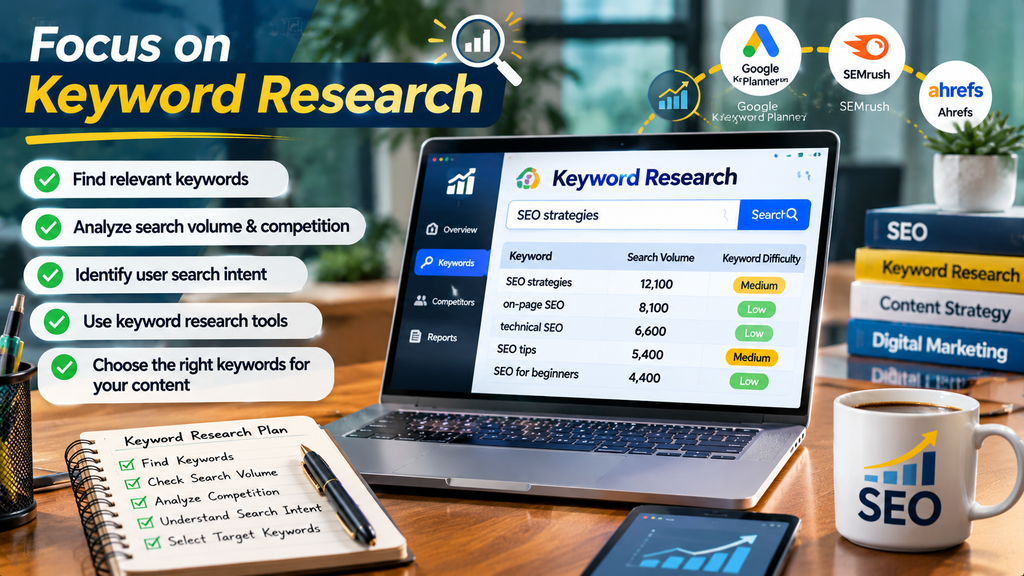
Keyword research is one of the most important parts of SEO. It helps you understand what people are searching for on Google.
Before creating website content, identify relevant keywords related to your business, products, or services.
For example, if you own a digital marketing agency in Mumbai, you can target keywords such as:
- Digital marketing agency in Mumbai.
- Best SEO services in Mumbai.
- Social media marketing services.
- Performance marketing agency.
Tools like Google Keyword Planner, Ahrefs, and SEMrush can help you discover relevant keywords and understand search demand.
2. Create High-Quality and Helpful Content

Content plays an important role in SEO. Google aims to provide users with useful, relevant, and trustworthy information.
Instead of creating content only to include keywords, focus on answering your audience’s questions and solving their problems.
For example, if your website focuses on digital marketing, you can publish blogs about SEO, Google Ads, social media marketing, email marketing, and AI marketing.
Make sure your articles provide valuable information, practical examples, and clear explanations.
3. Optimize Your On-Page SEO
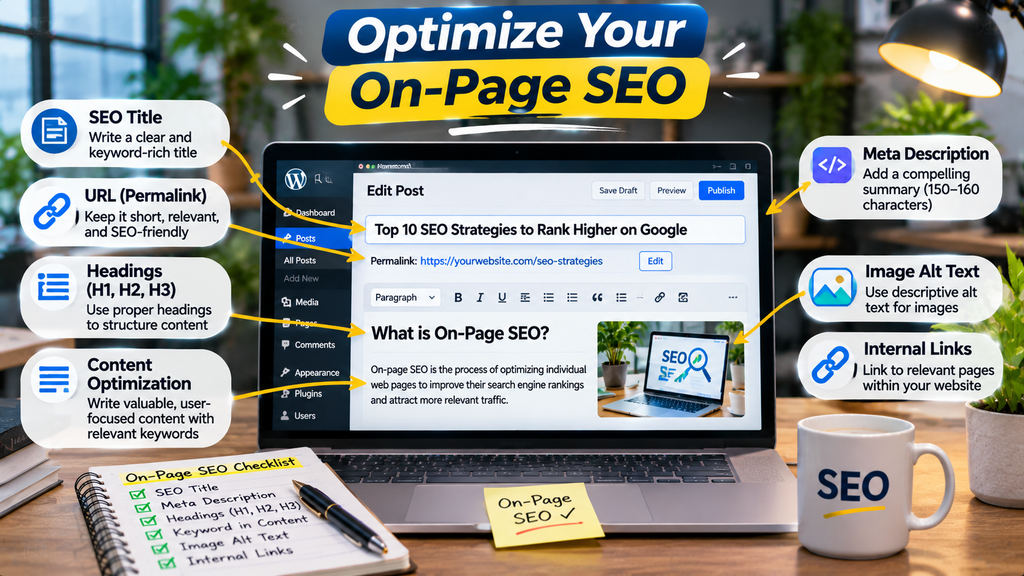
On-page SEO means optimizing individual website pages to help search engines understand their content.
Important on-page SEO elements include:
- SEO Title: Write an attractive title that clearly explains your page topic.
- Meta Description: Add a short description that encourages users to visit your website.
- Headings: Use proper H1, H2, and H3 headings.
- Keywords: Include relevant keywords naturally in your content.
- Image Alt Text: Describe images to help search engines understand them.
- Internal Links: Connect related pages and blogs on your website.
Proper on-page optimization improves content structure and helps search engines understand your website.
4. Improve Website Loading Speed
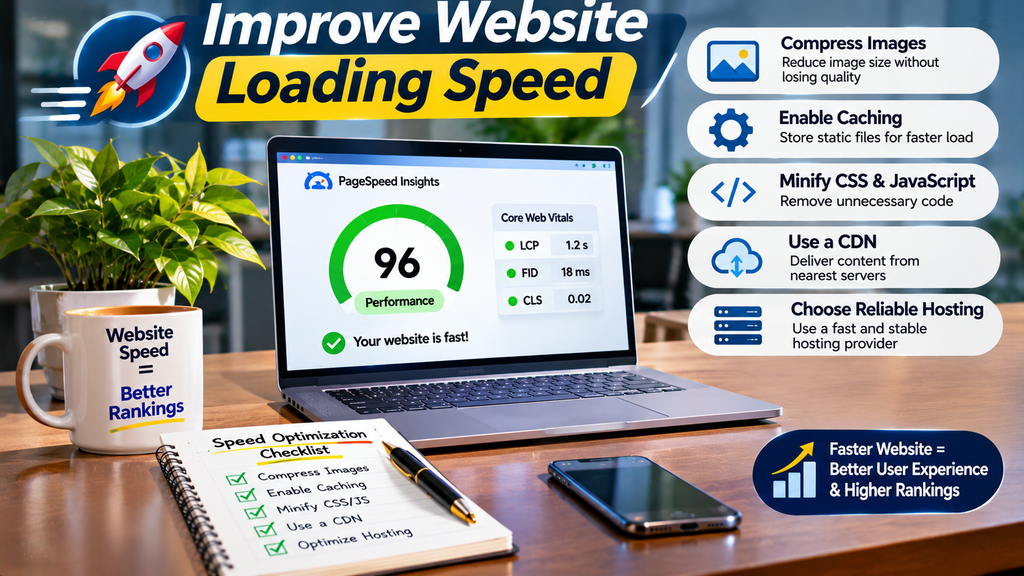
Website speed is an important part of user experience. Visitors may leave a website if pages take too long to load.
A slow website can negatively affect user experience and make it harder for visitors to access your content.
To improve website speed:
- Compress large images.
- Use a reliable hosting provider.
- Minimize unnecessary plugins.
- Enable browser caching.
- Optimize CSS and JavaScript.
- Use a Content Delivery Network (CDN) when appropriate.
You can use Google PageSpeed Insights to analyze your website’s loading performance.
5. Make Your Website Mobile-Friendly

Most internet users access websites through smartphones. Therefore, having a mobile-friendly website is essential.
Google primarily uses the mobile version of website content for indexing and ranking.
Make sure your website:
- Adjusts properly to different screen sizes.
- Has readable text.
- Uses mobile-friendly navigation.
- Loads quickly on smartphones.
- Has properly sized buttons and links.
A responsive website provides a better experience for mobile visitors.
6. Build Quality Backlinks
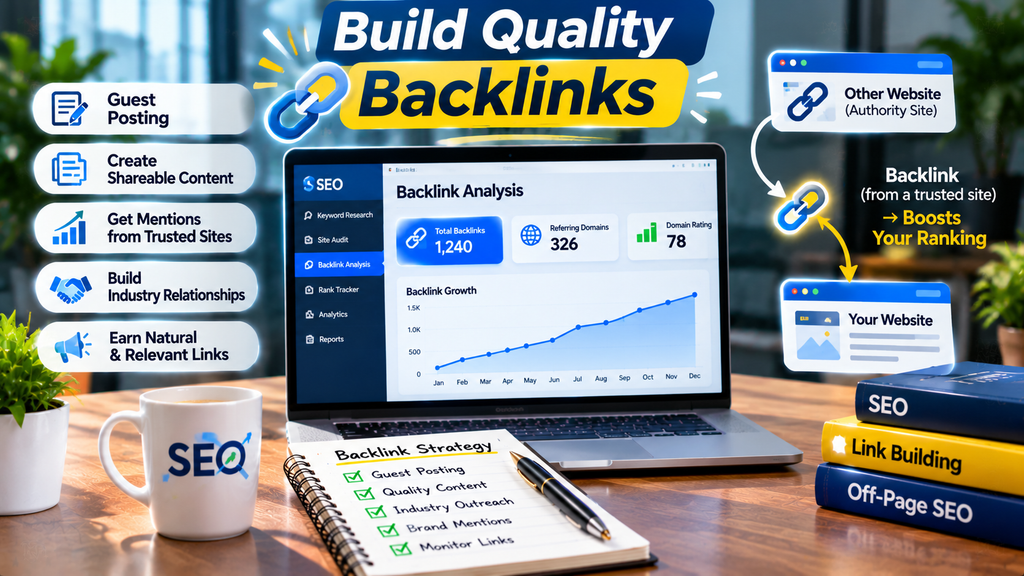
Backlinks are links from other websites that point to your website. They can help search engines discover your content and understand your website’s reputation.
However, not all backlinks are valuable. Focus on earning relevant and trustworthy backlinks instead of purchasing large numbers of low-quality links.
Some ways to build quality backlinks include:
- Publishing useful and informative articles.
- Guest posting on relevant websites.
- Creating original research and statistics.
- Building relationships with industry websites.
- Getting mentioned by trusted publications.
Quality matters more than quantity when building backlinks.
7. Focus on Technical SEO
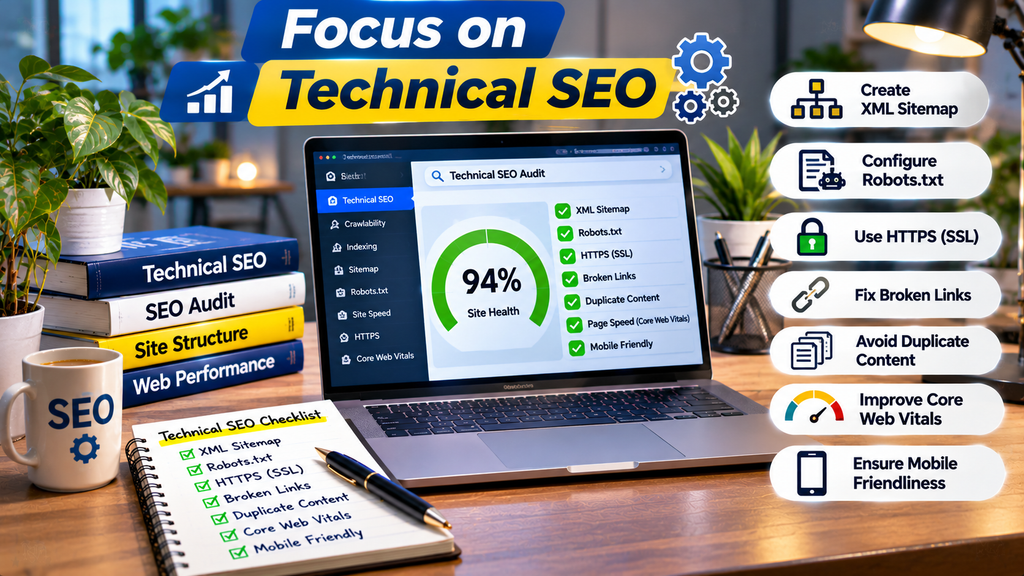
Technical SEO helps search engines crawl, understand, and index your website properly.
Even high-quality content may struggle to appear in search results if search engines cannot access important pages.
Important technical SEO activities include:
- Creating an XML sitemap.
- Checking the robots.txt file.
- Fixing broken links.
- Using HTTPS security.
- Improving website structure.
- Fixing duplicate content issues.
- Checking indexing problems.
Google Search Console is a useful tool for identifying website indexing and technical SEO issues.
8. Optimize Images for SEO
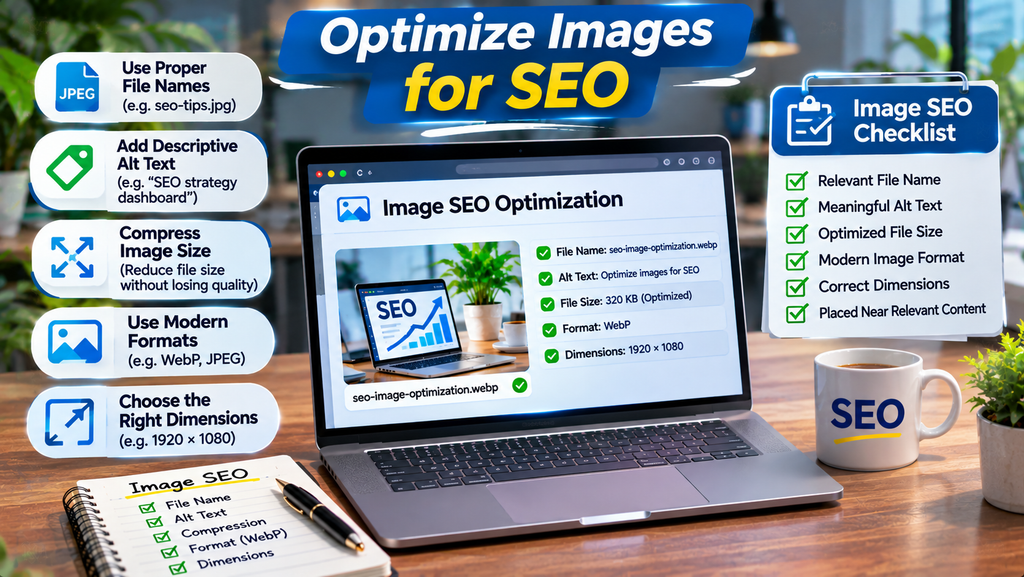
Images make website content more attractive and improve the overall user experience. However, large and unoptimized images can slow down your website.
Follow these image SEO practices:
- Use descriptive image file names.
- Add meaningful alt text.
- Compress image file sizes.
- Use modern image formats such as WebP.
- Choose appropriate image dimensions.
- Place images near relevant content.
These practices can improve website performance and help search engines understand your images.
9. Use Internal Linking Strategically
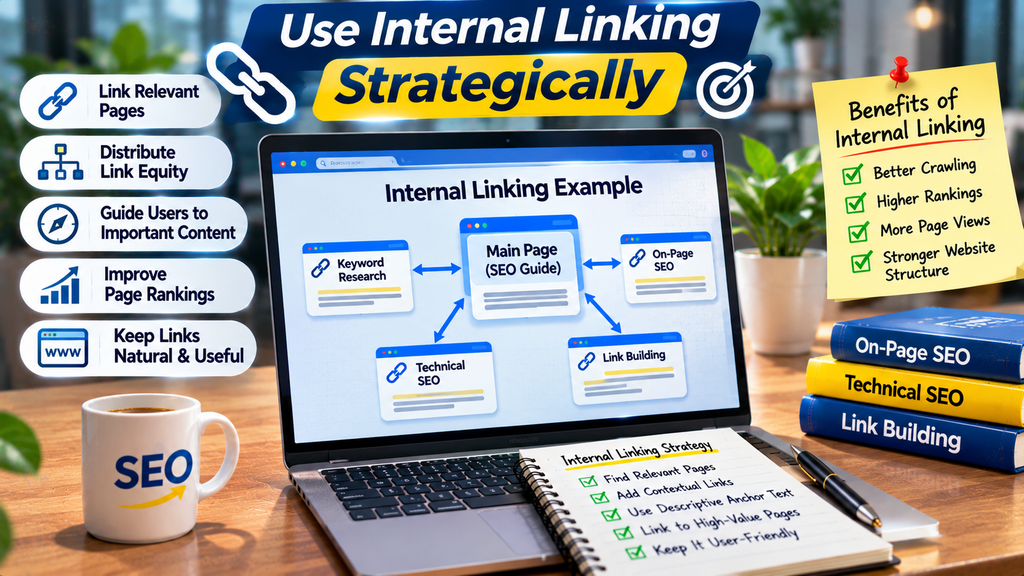
Internal linking means connecting one page of your website to another relevant page.
For example, if you publish a blog about SEO, you can link it to other articles about keyword research, content marketing, technical SEO, and digital marketing.
Internal links help visitors discover related information and make website navigation easier.
They also help search engines understand the relationship between different pages on your website.
10. Track SEO Performance Regularly
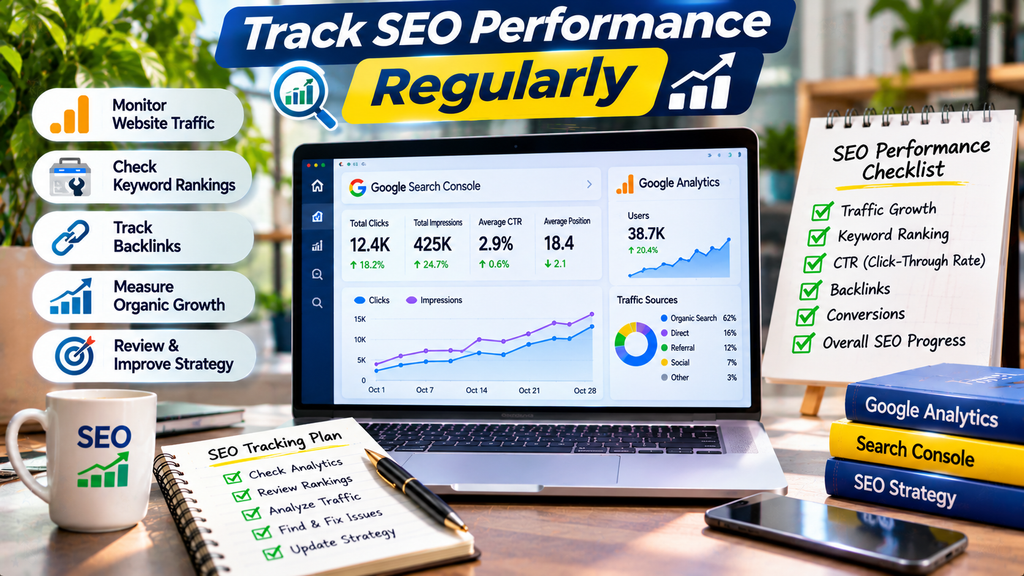
SEO is not a one-time activity. You need to monitor your website’s performance and continuously improve your strategy.
Some important SEO metrics include:
- Organic Traffic.
- Keyword Rankings.
- Click-Through Rate (CTR).
- Impressions.
- Website Conversions.
- Backlink Growth.
- Page Performance.
Tools such as Google Analytics 4, Google Search Console, Ahrefs, and SEMrush can help you monitor and analyze SEO performance.
Regular analysis helps you identify what is working and where improvements are needed.
Conclusion
Ranking higher on Google requires a combination of quality content, proper keyword research, technical optimization, backlinks, and a positive user experience.
In 2026, businesses should focus on creating helpful content that satisfies user search intent rather than relying only on traditional keyword strategies.
Start by implementing these 10 SEO strategies, monitor your website performance, and make improvements regularly.
Remember, SEO takes time and consistency. There is no guaranteed shortcut to the first position on Google.
The best SEO strategy is to create a website that provides real value to users while following search engine best practices.