
Content marketing has become one of the most effective strategies for growing a business online. Whether you are a small business owner, digital marketer, freelancer, or beginner, content marketing can help you attract potential customers, build brand awareness, and increase website traffic.
However, getting started with content marketing can feel confusing. You might wonder what type of content to create, where to publish it, and how to reach the right audience.
Don’t worry! In this beginner-friendly guide, we will explore 10 practical content marketing tips to help you build a successful content marketing strategy.
1. Understand Your Target Audience

The first step in content marketing is understanding your target audience. Before creating content, you need to know who you want to reach.
Identify your audience’s age, interests, location, problems, and online behaviour. Try to understand what questions they search for on Google and what type of information they need.
For example, if you run a fitness business, your target audience might be people interested in weight loss, healthy eating, and workout routines.
Creating content according to your audience’s needs makes your marketing more effective.
2. Set Clear Content Marketing Goals

Before publishing content, decide what you want to achieve through your marketing efforts.
Your goals could include:
- Increasing website traffic.
- Generating quality leads.
- Building brand awareness.
- Increasing social media engagement.
- Improving customer trust.
- Increasing sales and conversions.
Having clear goals helps you create the right content and measure your marketing performance.
For beginners, it is better to focus on one or two goals instead of trying to achieve everything at once.
3. Choose the Right Content Format

Content marketing is not limited to writing blogs. There are different content formats that you can use to connect with your audience.
Some popular content formats include:
- Blog posts and articles.
- Instagram posts and reels.
- YouTube videos.
- Infographics.
- Email newsletters.
- Case studies.
- Podcasts.
Choose a format based on your audience’s preferences and your business goals.
For example, educational businesses can use YouTube videos and blogs, while fashion brands can focus on Instagram reels and visual content.
4. Focus on SEO-Friendly Content
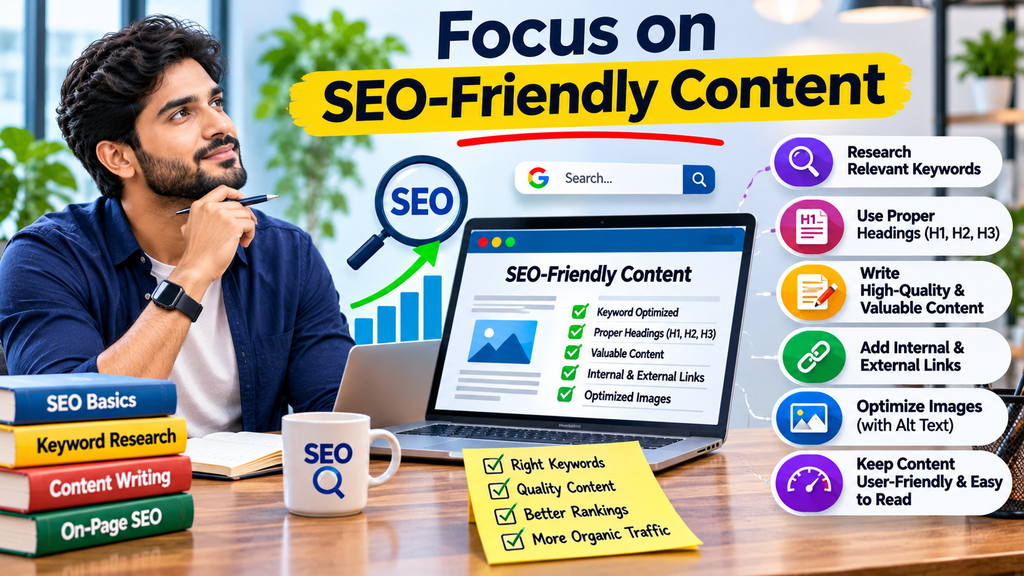
Search Engine Optimization (SEO) plays an important role in content marketing. It helps your website and blog posts appear in search engine results.
To create SEO-friendly content:
- Research relevant keywords.
- Include keywords naturally in headings and content.
- Write attractive titles and meta descriptions.
- Use proper heading structures (H1, H2, and H3).
- Add relevant internal and external links.
- Optimize images with descriptive alt text.
For example, if your topic is digital marketing, you can target keywords such as “digital marketing tips for beginners” or “content marketing strategies.”
Good SEO practices can help attract organic traffic to your website.
5. Create Valuable and Helpful Content

Your main goal should be to provide useful information rather than simply promoting your products or services.
People prefer content that answers their questions, solves problems, and provides practical solutions.
For example, instead of writing only about your digital marketing services, create helpful articles such as:
- How to Improve Website Traffic.
- SEO Tips for Small Businesses.
- How to Start Digital Marketing.
- Best Social Media Marketing Strategies.
Helpful content builds trust and encourages visitors to return to your website.
6. Maintain a Consistent Content Schedule

Consistency is one of the most important factors in content marketing.
Publishing content randomly can make it difficult to build an audience. Instead, create a content calendar to plan your upcoming blogs, videos, and social media posts.
For example, you can follow this beginner-friendly schedule:
- Monday: Publish a blog post.
- Tuesday: Share an Instagram post.
- Wednesday: Upload an educational reel.
- Friday: Share useful marketing tips.
- Saturday: Send an email newsletter.
You don’t need to publish content every day. Focus on maintaining a realistic schedule and delivering quality content.
7. Use Social Media to Promote Your Content

Creating good content is only half the work. You also need to promote it to reach more people.
Social media platforms such as Instagram, Facebook, LinkedIn, and YouTube can help you distribute your content and connect with potential customers.
For example, when you publish a new blog, share its key points through Instagram carousels, Facebook posts, or LinkedIn updates.
Social media promotion can increase content visibility, website visits, and audience engagement.
8. Track Your Content Marketing Performance
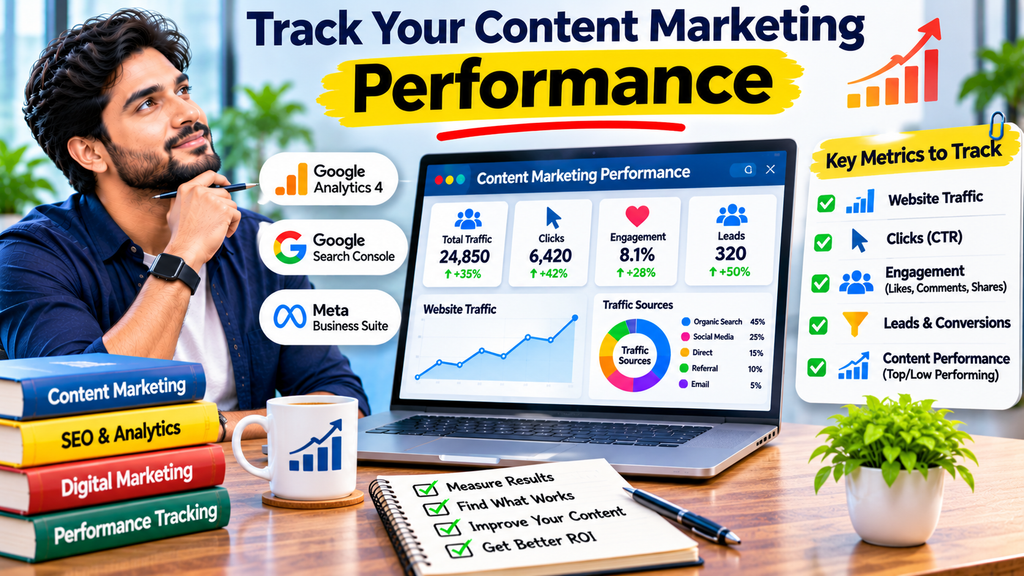
You cannot improve your content marketing strategy without measuring its performance.
Use analytics tools to understand how your content is performing.
Some useful tools include:
- Google Analytics 4 (GA4): Tracks website traffic and user behaviour.
- Google Search Console: Monitors website search performance.
- Google Search Trends: Helps explore changing search interests.
- Meta Business Suite: Tracks social media performance.
Important metrics to monitor include website traffic, impressions