
Content marketing is one of the most effective strategies in digital marketing. Today, businesses use content to attract customers, build brand awareness, increase website traffic, and generate leads.
Whether you are a small business owner, blogger, freelancer, or digital marketing beginner, content marketing can help you grow your online presence without depending entirely on paid advertisements.
However, getting started can be challenging. You may wonder what type of content to create, where to publish it, and how to attract the right audience.
In this blog, we will explore 10 useful content marketing tips for beginners to help you build an effective content strategy.
1. Understand Your Target Audience

Before creating content, you need to understand who you want to reach.
Your target audience includes people who may be interested in your products, services, or information.
Try to understand:
- Their age and location.
- Their interests and needs.
- Problems they want to solve.
- Topics they search for online.
- Social media platforms they use.
For example, if you run a fitness business, your audience may be interested in workout routines, healthy recipes, and fitness tips.
2. Set Clear Content Marketing Goals

Every content marketing strategy should have a clear objective. Without goals, it becomes difficult to measure your progress.
Some common content marketing goals include:
- Increasing website traffic.
- Improving brand awareness.
- Generating potential customers.
- Increasing social media engagement.
- Building customer trust.
- Promoting products and services.
Start with one or two goals and create content that supports them.
3. Choose the Right Content Format

Content marketing is not limited to blog writing. You can create different types of content depending on your audience and marketing goals.
Popular content formats include:
- Blog posts and articles.
- Instagram posts and Reels.
- YouTube videos.
- Infographics.
- Email newsletters.
- Case studies.
- Product guides and tutorials.
For example, a digital marketing agency can publish SEO blogs, create Instagram marketing tips, and upload educational YouTube videos.
4. Focus on SEO-Friendly Content
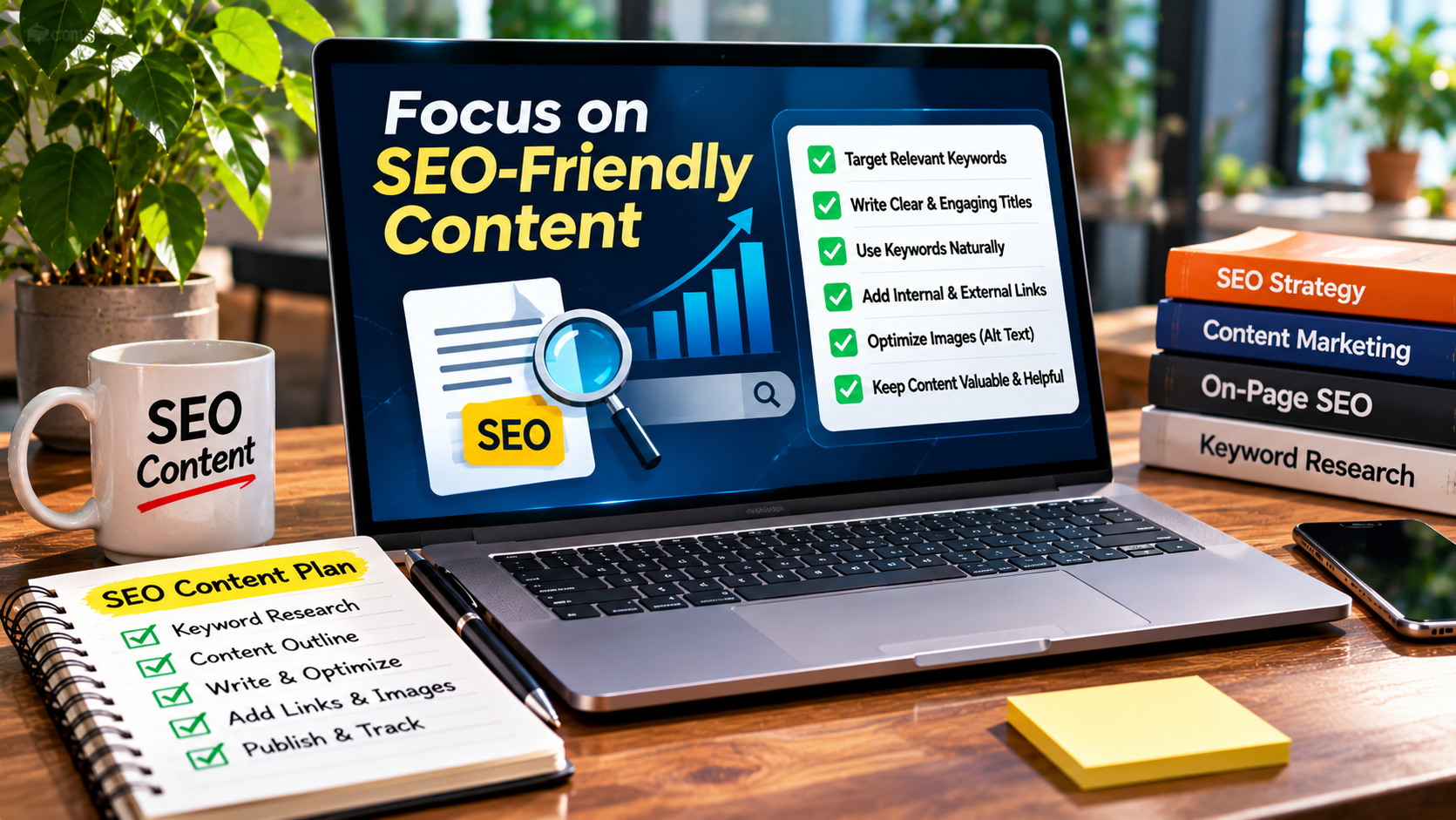
Search Engine Optimization (SEO) helps your content appear in relevant Google search results.
If you want people to discover your blogs, you should follow basic SEO practices.
Important SEO tips include:
- Research relevant keywords.
- Write clear and attractive headings.
- Use keywords naturally.
- Add internal links.
- Optimize images with descriptive alt text.
- Write helpful meta descriptions.
- Make your website mobile-friendly.
Remember, your main focus should be creating useful content for readers rather than simply adding keywords.
5. Create Valuable and Helpful Content

People visit websites because they want information, solutions, or entertainment.
Your content should answer their questions and solve real problems.
For example, instead of publishing an article titled “Digital Marketing,” create a more specific article such as “10 Digital Marketing Tips for Small Businesses.”
Helpful content can encourage visitors to spend more time on your website and return for future information.
6. Maintain a Consistent Content Schedule

Consistency is important for building an online audience.
You do not need to publish content every day. Instead, create a realistic schedule that you can maintain.
For example:
- Monday: Publish a blog post.
- Tuesday: Share an Instagram post.
- Wednesday: Create an educational Reel.
- Thursday: Share an SEO tip.
- Friday: Publish a short video.
A content calendar can help you organize topics, publishing dates, and platforms.
7. Use Social Media to Promote Your Content

Creating content is only one part of content marketing. You also need to promote it so that people can discover it.
Social media platforms such as Instagram, Facebook, LinkedIn, and YouTube can help you reach a wider audience.
For example, if you publish a blog about SEO strategies, you can create an Instagram carousel summarizing its main points and direct interested users to the full article.
Choose platforms that match your target audience instead of trying to use every platform.
8. Use AI Tools for Content Creation

Artificial Intelligence (AI) tools can make content marketing easier for beginners.
Popular tools include:
- ChatGPT – Generate blog ideas, outlines, and content drafts.
- Canva AI – Create social media graphics and marketing designs.
- Grammarly – Improve grammar and writing clarity.
- Google Gemini – Support research and brainstorming.
- HubSpot – Assist with marketing activities and content planning.
AI should be used as an assistant. Always review generated content, check facts, and add your own experience and creativity.
9. Track Your Content Marketing Performance
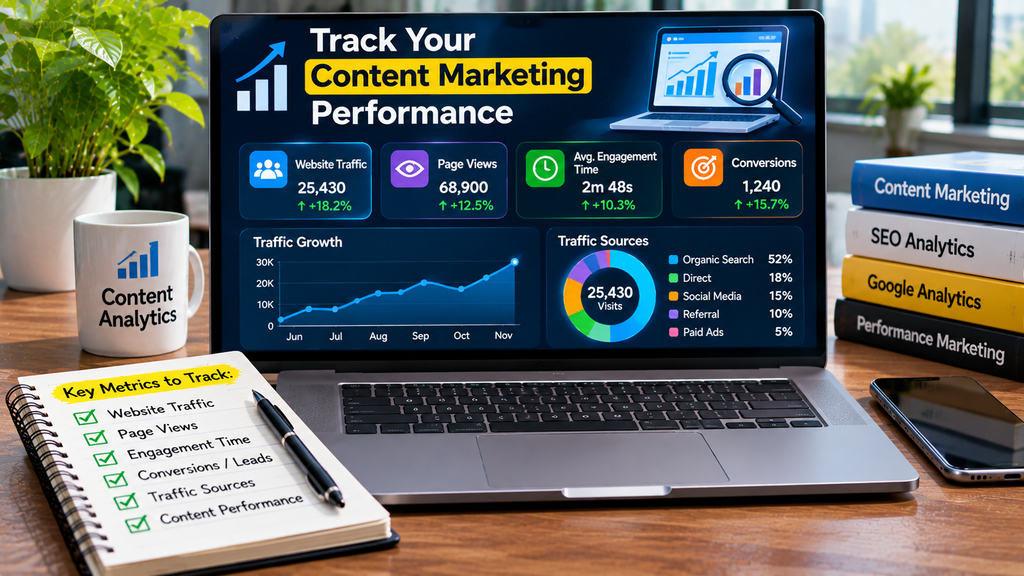
You should regularly measure how your content is performing.
Some important metrics include:
- Website traffic.
- Page views.
- Average engagement time.
- Social media engagement.
- Click-through rate (CTR).
- Leads and conversions.
Tools such as Google Analytics 4 and Google Search Console can help you understand website traffic and search performance.
Use these insights to identify which topics attract the most interest and improve your future content.
10. Update and Improve Old Content
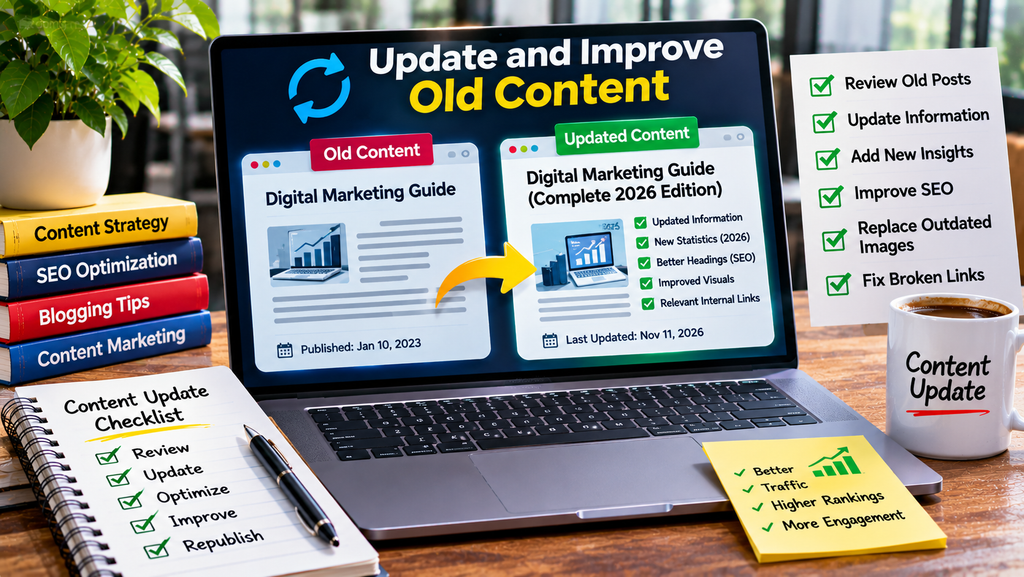
Content marketing does not end after publishing an article.
Over time, information can become outdated, links may stop working, and new information may become available.
Review your older articles regularly. Update statistics, add relevant information, improve headings, replace outdated images, and fix broken links.
Updating useful content can improve its quality and help maintain its relevance for readers.
Conclusion
Content marketing is an important part of digital marketing because it helps businesses attract audiences, build trust, and generate potential customers.
As a beginner, focus on understanding your audience, creating helpful content, following basic SEO practices, maintaining consistency, and tracking performance.
You do not need expensive tools or a large marketing team to get started. Begin with simple blog posts and social media content, learn from your results, and improve your strategy over time.
Remember, successful content marketing is not just about publishing more content. It is about publishing the right content for the right audience.