
Introduction
Artificial Intelligence (AI) is changing the way businesses promote their products and services online. In 2026, AI has become an important part of digital marketing because it helps businesses work smarter, save time, understand customers, and improve marketing results. From creating content and managing social media to running advertisements and improving search engine rankings, AI is transforming almost every area of digital marketing.
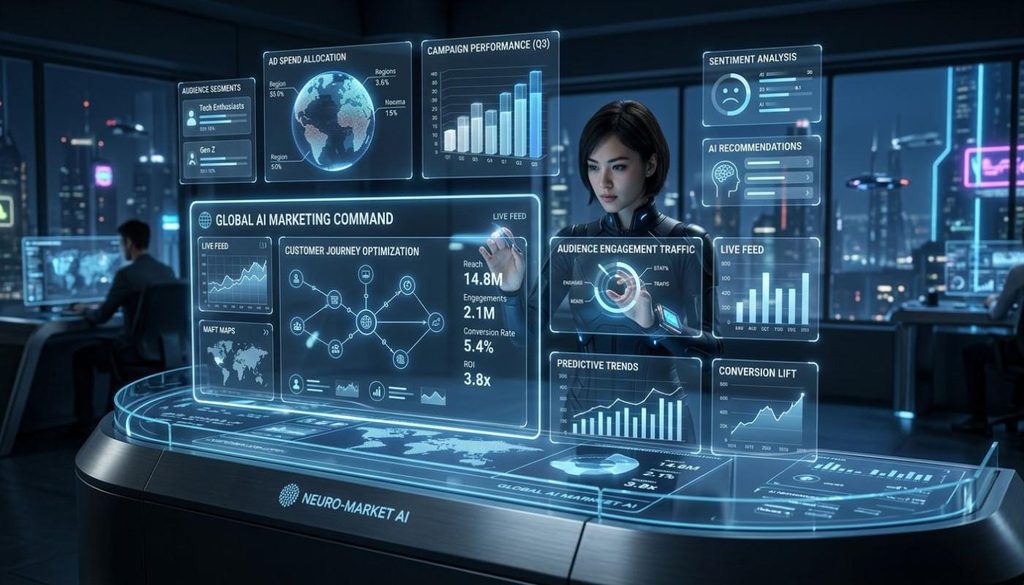
Today, businesses use AI-powered tools to understand customer behaviour, identify market trends, and create personalized marketing strategies. Let’s explore how Artificial Intelligence is transforming digital marketing in 2026.
1. AI-Powered Content Creation
Content is one of the most important parts of digital marketing. Businesses need blogs, website content, social media posts, product descriptions, and advertisements to attract customers. Creating fresh content regularly can take a lot of time.
AI tools such as ChatGPT, Google Gemini, and Jasper help marketers generate content ideas, write captions, create blog outlines, and improve existing content. These tools make content creation faster and easier.
However, AI-generated content should always be reviewed and edited by humans to maintain quality, accuracy, and originality.
2. Smarter Search Engine Optimization (SEO)
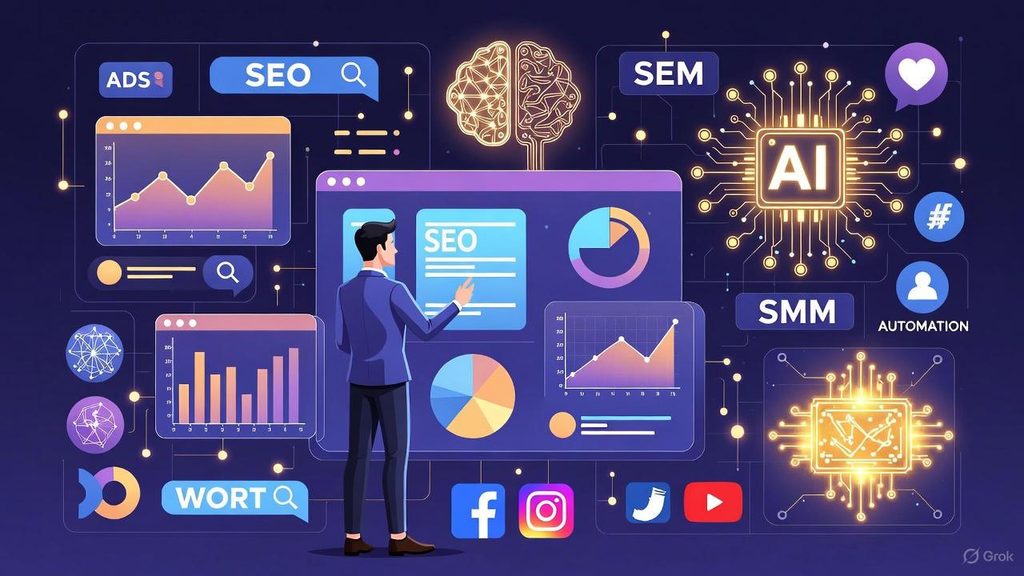
Search Engine Optimization (SEO) helps websites improve their visibility on search engines like Google. AI is making SEO more efficient by helping marketers research keywords, understand search intent, analyze competitors, and identify content opportunities.
AI-powered SEO tools can suggest relevant keywords, find website errors, analyze website performance, and recommend content improvements.
AI is also changing how people search for information. Businesses now need to create useful, relevant, and trustworthy content that can perform well in traditional search engines as well as AI-powered search experiences.
3. Personalized Customer Experience
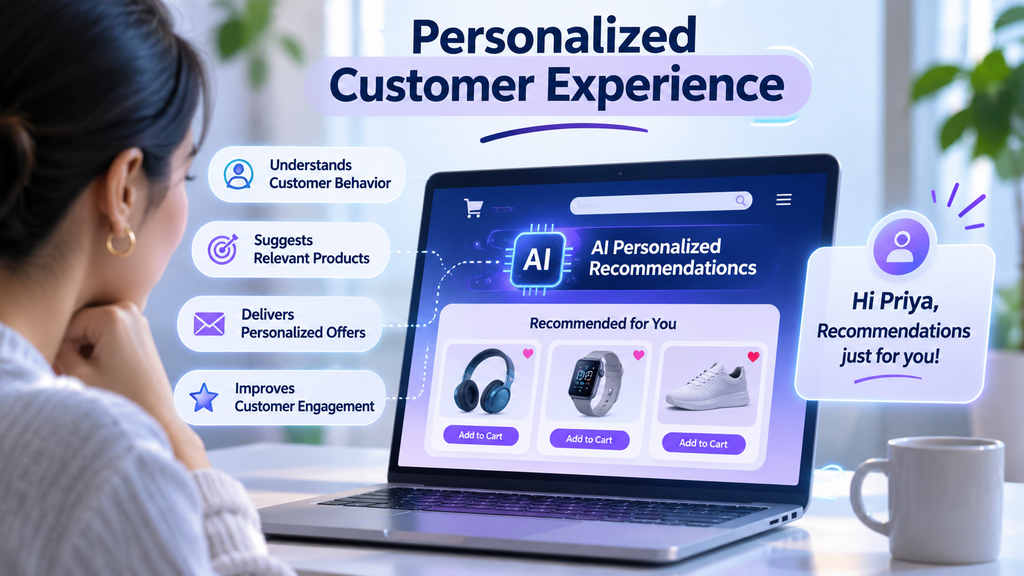
Customers prefer brands that understand their interests and needs. AI helps businesses provide personalized experiences by analyzing customer behaviour, browsing history, and previous purchases.
For example, when customers shop on an e-commerce website, AI can recommend products based on their interests and shopping activities.
Personalized recommendations help businesses improve customer engagement, build stronger relationships, and increase the chances of sales.
4. AI in Social Media Marketing
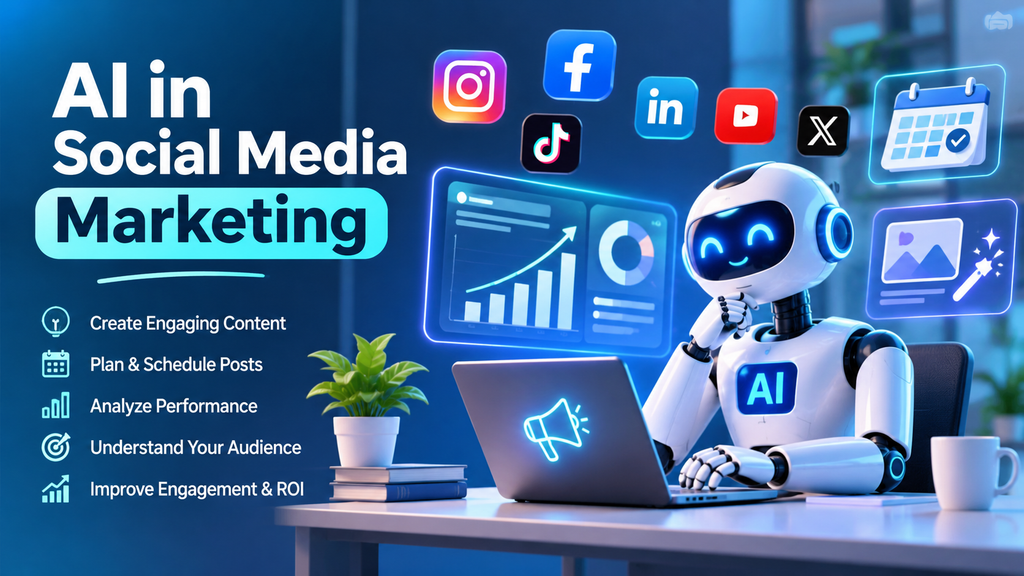
Social media platforms such as Instagram, Facebook, and LinkedIn are important channels for digital marketing. Managing multiple social media accounts and regularly creating engaging content can be challenging.
AI tools help marketers generate post ideas, write captions, analyze audience engagement, identify trends, and plan content schedules.
AI can also help businesses understand which types of posts receive more attention from their audiences. This allows marketers to improve their social media strategies and create more engaging content.
5. AI-Powered Advertising and Performance Marketing
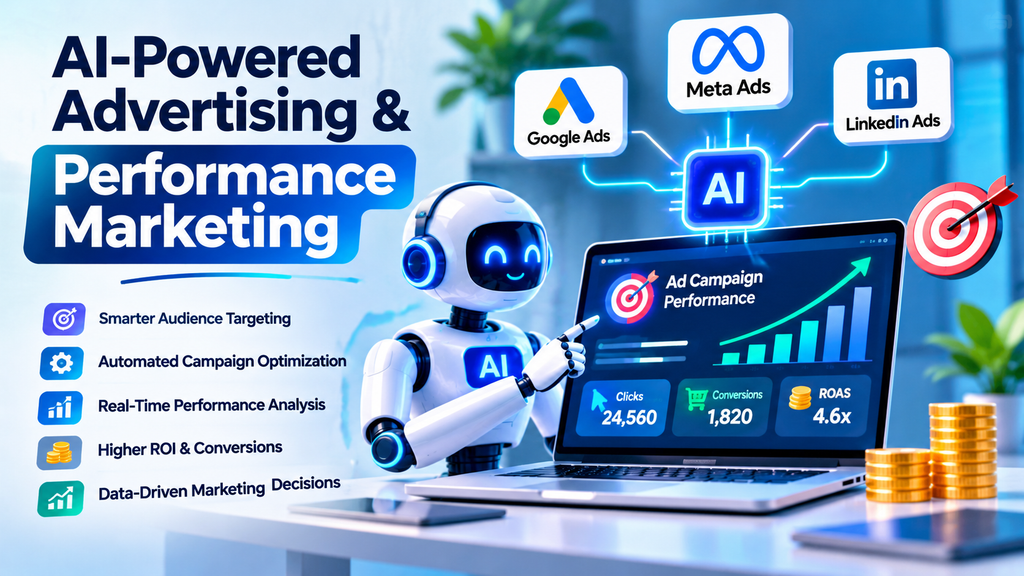
Performance marketing focuses on achieving measurable results such as website traffic, leads, conversions, and sales. AI is helping businesses improve their advertising campaigns through automation and data analysis.
Platforms like Google Ads and Meta Ads use AI-powered features to help advertisers optimize campaigns, identify relevant audiences, and improve ad performance.
AI can assist with audience targeting, automated bidding, advertisement testing, and campaign analysis. This helps marketers make better decisions and use their advertising budgets more effectively.
6. AI Chatbots and Customer Support
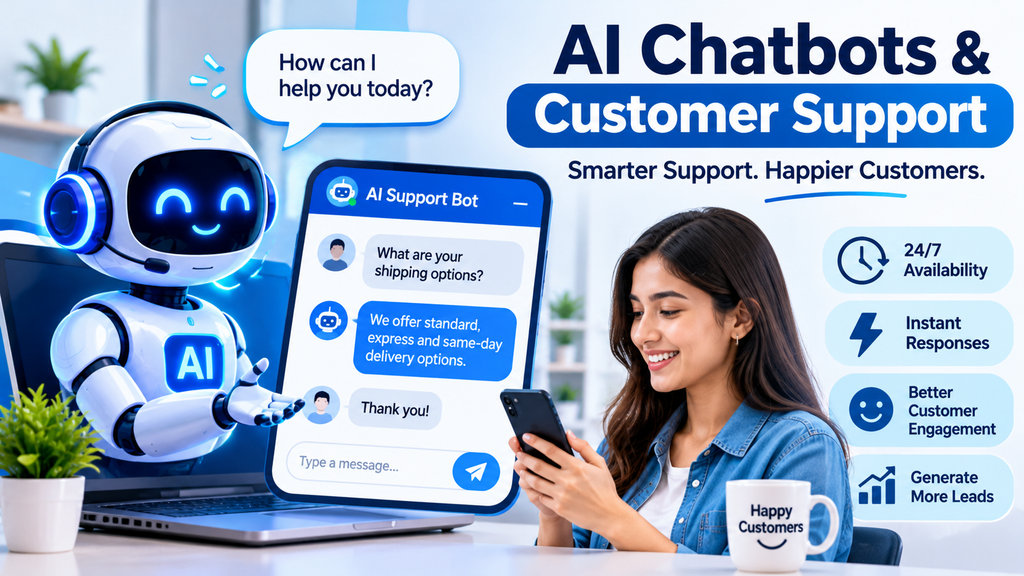
AI chatbots are changing the way businesses communicate with customers. They can answer common questions, provide product information, collect customer details, and offer basic customer support.
For example, if a customer visits an online shopping website and asks about product prices or delivery information, an AI chatbot can provide an immediate response.
AI chatbots can operate 24 hours a day, helping businesses improve customer service, save time, and generate potential leads.
7. Predictive Analytics and Data-Driven Marketing
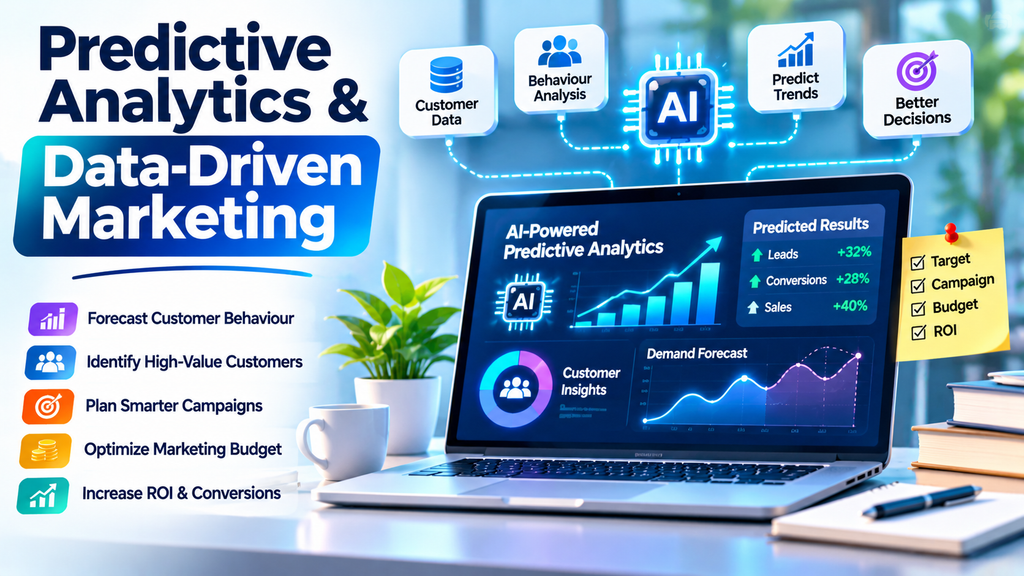
AI helps businesses analyze large amounts of customer and marketing data. Predictive analytics uses historical information to identify patterns and estimate possible future outcomes.
For example, an online store can analyze previous sales data to understand which products may become popular during festive seasons.
This information helps marketers plan campaigns, understand customer demand, manage budgets, and make more informed business decisions.
8. Email Marketing Automation
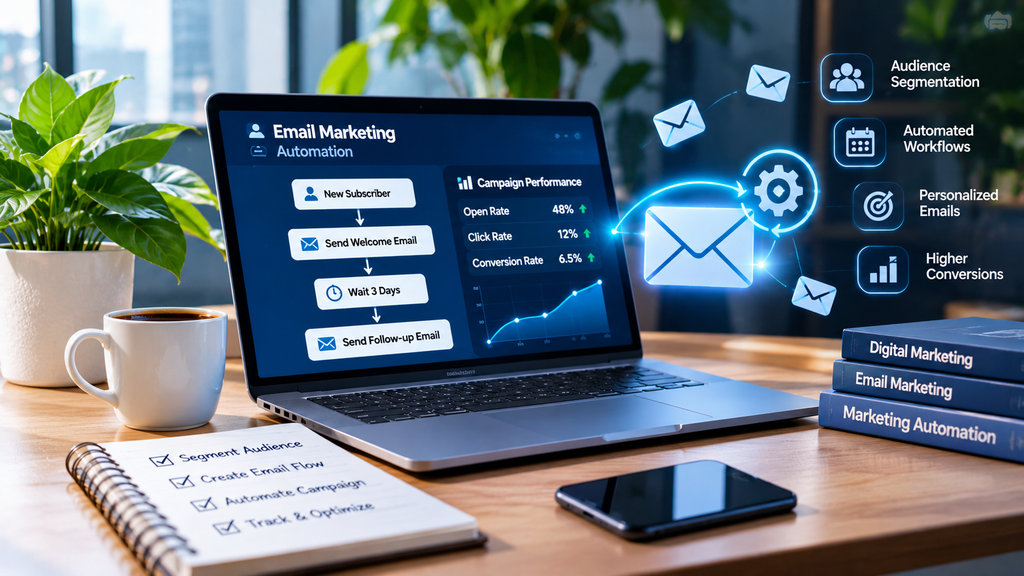
Email marketing is an effective way to communicate with existing and potential customers. AI makes email marketing smarter by helping businesses create personalized messages, suggest subject lines, segment audiences, and optimize campaign timing.
For example, an online shopping company can send personalized product recommendations or special offers based on a customer’s previous purchases.
This helps businesses improve customer engagement and build long-term relationships.
Benefits of Artificial Intelligence in Digital Marketing
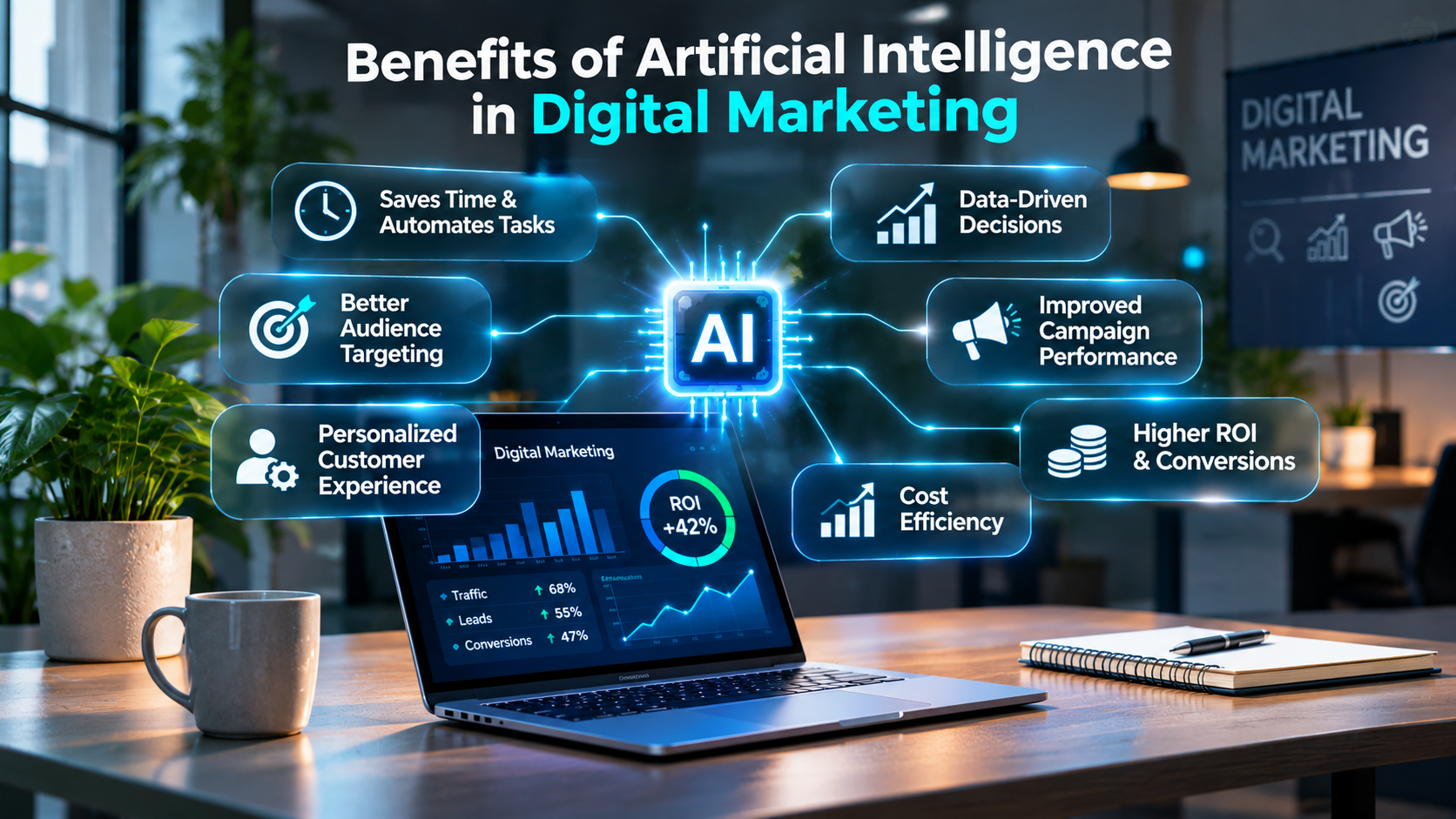
AI provides several benefits to businesses and digital marketers:
- Saves Time: Automates repetitive marketing activities.
- Better Targeting: Helps businesses reach relevant audiences.
- Personalization: Creates more relevant customer experiences.
- Data Analysis: Processes large amounts of marketing data.
- Improved Efficiency: Helps optimize marketing campaigns.
- Better Decision-Making: Provides useful insights for marketing strategies.
Challenges of Using AI in Digital Marketing
Although AI offers many advantages, it also comes with some challenges. AI-generated information can sometimes be inaccurate, so human verification is important. Businesses must also protect customer data and use AI responsibly.
Another challenge is overdependence on AI. Digital marketing still requires human creativity, emotional understanding, communication skills, and strategic thinking.
Conclusion
Artificial Intelligence is transforming digital marketing by making business activities faster, smarter, and more efficient. From SEO and content creation to social media marketing, paid advertising, and customer support, AI is helping businesses improve their online presence and connect with customers.
However, AI should be used as a powerful assistant rather than a complete replacement for human marketers. Businesses that combine AI technology with human creativity and marketing knowledge can build stronger marketing strategies.