
Email Marketing

Blog

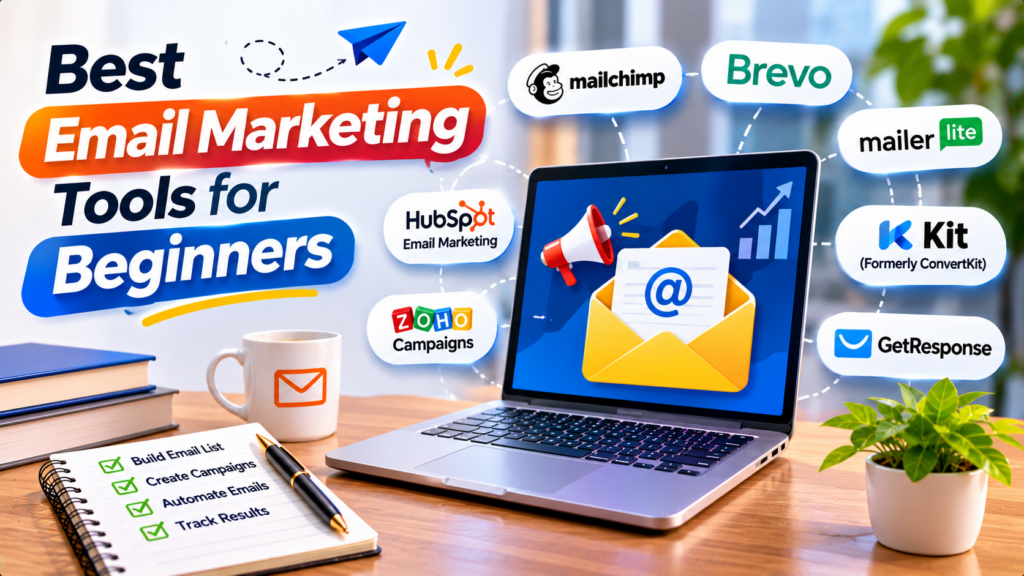
Best Email Marketing Tools for Beginners.

Email marketing is one of the most effective ways to connect with customers, promote products, and grow a business online. Whether you are a blogger, freelancer, small business owner, or digital marketing beginner, email marketing can help you reach your target audience directly. However, getting started can feel confusing because there are so many email marketing tools available. The good news is that you do not need advanced technical knowledge to use them. Many platforms offer beginner-friendly features such as ready-made templates, drag-and-drop editors, automation, and performance reports. In this blog, we will explore the 7 best email marketing tools for beginners and understand their important features. What Is an Email Marketing Tool? An email marketing tool is software that helps businesses create, send, manage, and track marketing emails. Instead of sending emails individually, you can send campaigns to hundreds or thousands of subscribers at once. These tools also help you automate emails, manage contact lists, create newsletters, and measure campaign performance. 1. Mailchimp Mailchimp is one of the most popular email marketing platforms for beginners. It provides an easy-to-use interface that helps users create professional email campaigns without coding knowledge. Key Features: Best For: Small businesses, beginners, and marketers who want to create professional email campaigns. 2. Brevo Brevo is an email marketing platform that offers email campaigns, automation, contact management, and additional communication tools. It is useful for businesses that want to manage customer communication from one platform. Beginners can use its campaign editor to design emails and track important results. Key Features: Best For: Small businesses and beginners looking for multiple marketing features in one platform. 3. MailerLite MailerLite is known for its simple interface and beginner-friendly email creation features. It allows users to create newsletters, landing pages, and signup forms. You can also build automated email workflows to send messages when subscribers take specific actions. Key Features: Best For: Bloggers, freelancers, content creators, and small businesses. 4. Kit (Formerly ConvertKit) Kit is designed mainly for content creators, bloggers, and online educators. It helps creators build an email subscriber list and communicate with their audience. For example, a blogger can use Kit to send automatic welcome emails whenever someone subscribes to their newsletter. Key Features: Best For: Bloggers, YouTubers, and digital content creators. 5. GetResponse GetResponse is an email marketing platform that provides tools for email campaigns, automation, landing pages, and audience management. It can help businesses create marketing campaigns and build customer relationships through automated communication. Key Features: Best For: Small businesses and marketers who want additional marketing features as they grow. 6. HubSpot Email Marketing HubSpot offers email marketing features as part of its broader CRM and marketing platform. It helps businesses manage customer information and create personalized marketing campaigns. Its connection with CRM data makes it useful for businesses that want to understand their customers and improve communication. Key Features: Best For: Businesses that want to combine email marketing with customer relationship management. 7. Zoho Campaigns Zoho Campaigns is an email marketing solution that helps businesses create newsletters, manage subscribers, and automate email campaigns. It also integrates with other Zoho business applications, making it useful for companies already using the Zoho ecosystem. Key Features: Best For: Small businesses, startups, and companies using Zoho applications. How to Choose the Right Email Marketing Tool? Before selecting an email marketing platform, consider these important factors: Remember that free plans have different subscriber limits, sending limits, and feature restrictions. Always check the latest pricing and plan details before choosing a platform. Conclusion Email marketing is an important part of digital marketing because it helps businesses build relationships with customers, generate leads, and promote their products or services. Tools like Mailchimp, Brevo, MailerLite, Kit, GetResponse, HubSpot, and Zoho Campaigns make it easier for beginners to start email marketing without advanced technical skills. If you are just starting, choose a tool that matches your budget and business requirements. Learn how to create attractive emails, build a subscriber list, and track campaign results. With regular practice, you can develop effective email marketing campaigns and grow your digital marketing skills.
Blog

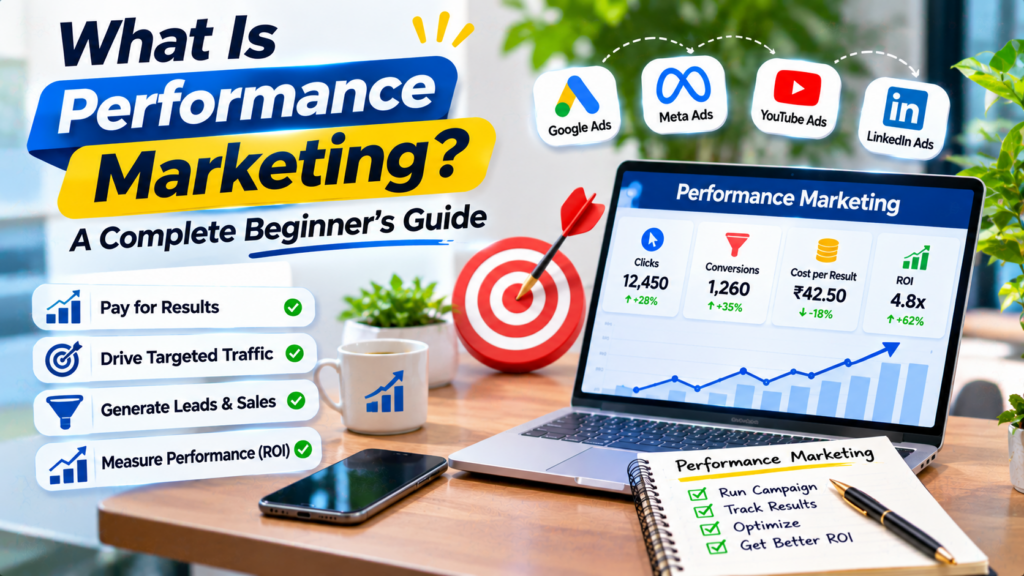
What Is Performance Marketing? A Complete Beginner’s Guide.

Introduction In today’s digital world, businesses are constantly looking for effective ways to reach customers, generate leads, and increase sales. Traditional advertising focuses on promoting products and building brand awareness, but businesses also want measurable results from their marketing investments. This is where Performance Marketing comes in. Performance Marketing is a digital marketing strategy in which businesses pay for specific measurable actions, such as clicks, leads, conversions, app installations, or sales. It helps companies understand how their advertising campaigns are performing and whether they are getting good returns on their investment. In this beginner’s guide, we will understand what performance marketing is, how it works, its different channels, benefits, and career opportunities. 1. What Is Performance Marketing? Performance Marketing is a type of online advertising where advertisers focus on measurable results rather than simply displaying advertisements. Businesses can track important activities such as website visits, clicks, leads, purchases, and conversions. For example, imagine you own an online clothing store and want to sell 100 T-shirts. You run a Facebook or Instagram advertising campaign targeting people interested in fashion. You can track: This information helps you understand whether your advertising campaign is successful. 2. How Does Performance Marketing Work? Performance Marketing follows a simple process that helps businesses achieve specific marketing goals. Step 1: Set Marketing Goals First, businesses decide what they want to achieve, such as generating leads, increasing website traffic, or selling products. Step 2: Select Advertising Platforms Marketers choose platforms such as Google Ads, Facebook Ads, Instagram Ads, or LinkedIn Ads depending on their target audience. Step 3: Create Advertisements They create attractive advertisements using images, videos, headlines, and call-to-action buttons. Step 4: Launch Campaigns The advertisements are published to reach the selected audience. Step 5: Track Performance Marketers monitor clicks, impressions, conversions, leads, and advertising costs. Step 6: Optimize Campaigns Based on the results, marketers improve their advertisements, targeting, and budgets to achieve better performance. 3. Types of Performance Marketing Channels There are several channels businesses use to run performance marketing campaigns. 1. Search Engine Marketing (SEM) Search Engine Marketing involves promoting websites through paid advertisements on search engines like Google. For example, when someone searches for “Best Digital Marketing Agency in Mumbai,” sponsored results may appear at the top of Google. 2. Social Media Advertising Businesses use platforms such as Facebook, Instagram, and LinkedIn to promote their products and services. These platforms allow advertisers to target audiences based on interests, demographics, and other available targeting options. 3. Affiliate Marketing Affiliate Marketing is a strategy where individuals or publishers promote another company’s products and earn commissions when users complete specific actions, usually purchases. For example, a YouTube creator can promote a product using an affiliate link and earn a commission from successful sales. 4. Display Advertising Display advertising uses visual advertisements such as banners, images, and videos on websites and applications to attract potential customers. 5. Email Marketing Businesses use email campaigns to communicate with customers, promote products, share offers, and encourage purchases. 4. Important Performance Marketing Metrics Performance marketers use different metrics to measure the success of advertising campaigns. For example, if a business spends ₹10,000 on advertising and generates ₹40,000 in revenue, its ROAS is 4x. This means the business generates ₹4 in revenue for every ₹1 spent on advertising. 5. Benefits of Performance Marketing Performance Marketing offers several advantages to businesses: 6. Popular Performance Marketing Tools Some commonly used tools and platforms include: 7. How to Start a Career in Performance Marketing? Performance Marketing is a growing career option for people interested in advertising, analytics, and digital marketing. Beginners can start by learning these skills: You can also create sample advertising campaigns and practice analyzing their performance to build a portfolio. Conclusion Performance Marketing is an effective digital marketing strategy that helps businesses achieve measurable results through online advertising. It allows companies to track their advertising expenses, understand customer behaviour, generate leads, and increase sales. From Google Ads and social media advertising to affiliate marketing and email campaigns, performance marketing provides several opportunities for businesses to grow online. For beginners, learning advertising platforms, marketing metrics, and campaign optimization is a great way to start a career in this field. Remember: Performance Marketing is not just about spending money on advertisements; it is about getting measurable results from every marketing investment.

Scroll to Top