Blog

Blog

Top 10 Best Certified Digital Marketers in Mumbai 2026

Mumbai is one of India’s biggest business and startup hubs, and the demand for skilled digital marketing professionals continues to grow in 2026. Businesses of all sizes are investing in SEO, Google Ads, social media marketing, content marketing, website development, and performance marketing to increase their online visibility and generate leads. Choosing the right digital marketer can be difficult because every professional has different skills, experience, pricing, and areas of specialization. To make the selection easier, this list highlights 10 certified digital marketers in Mumbai based on publicly available professional profiles, services, certifications, and online presence. This is a curated list rather than an official ranking. 1. Digital Shiva Yadav Digital Shiva Yadav is a digital marketing freelancer in Mumbai who focuses on helping businesses build a stronger online presence. His services can include SEO, social media marketing, content marketing, Google Business Profile optimization, paid advertising, and digital branding. For small businesses, startups, and local brands, working with an independent digital marketer can provide more personalized communication and customized strategies. A good digital marketing strategy should focus not only on getting traffic but also on converting visitors into enquiries and customers. Contact Details:Borivali West , MumbaiEmail: shivkumardigital366@gmail.comWebsite: https://shivayadavs.in/ 2. Digital Kunj Gohel Digital Kunj Gohel is a Mumbai-based certified digital marketer who focuses on strategy, creative marketing, audience understanding, and sustainable business growth. His profile highlights SEO, digital strategy, creative execution, and performance-focused marketing. His approach is particularly relevant for brands looking for more than basic social media posting or advertising. Understanding the target audience and creating a customized strategy can help businesses build stronger long-term digital visibility. Contact Details:vasai west, MumbaiEmail: digitalkunjgrow03@gmail.comWebsite: https://kunjgohel.in/ 3. Digital Rohan Thakur Digital Rohan Thakur is a certified digital marketing freelancer in Mumbai with a broad range of digital marketing services. Her publicly listed services include SEO, social media marketing, Google Ads, Meta Ads, website development, content creation, email marketing, local SEO, analytics, and reporting. This makes her suitable for businesses looking for multiple digital marketing services under one freelancer rather than hiring separate professionals for SEO, advertising, and social media. Contact Details:Andheri West, MumbaiEmail: digitalrohanthakur@gmail.comWebsite: https://digitalrohanthakur.com/ 4. Digital Dilip Suthar Digital Dilip is a certified digital marketer based in Andheri, Mumbai. Her profile focuses on helping businesses improve their online presence through performance-driven digital marketing strategies. Her listed skills include social media marketing, Meta Ads, and web development. Businesses interested in paid social campaigns and improving their digital presence may consider professionals with this combination of marketing and technical skills. contact Details:Borivali west, MumbaiEmail: dilipdigital580@gmail.comWebsite: https://dilipsuthars.in/ 5. Digital Ansh Sharma Digital Ansh Sharma is a freelance digital marketing strategist based in the Mumbai region. Her profile states that she is certified by Grow digital Institute and focuses on helping local brands improve their digital presence through data-backed strategies and creative execution. Her services include website development and digital marketing strategy, making her relevant for businesses that want to connect website performance with broader marketing goals. Contact Details:Goregaon West, MumbaiEmail:anshdigital628@gmail.comWebsite:https://anshsharma.in/ 6. Digital Disha Digital Disha is a certified digital marketing freelancer in Mumbai. His services include SEO, Google Ads, social media marketing, website development, and content marketing. His profile also highlights personalized strategies, transparent reporting, and a focus on lead generation and business growth. A combination of SEO and paid advertising can be useful for businesses that want both long-term organic visibility and faster lead-generation opportunities. Contact Details:Andheri West, MumbaiEmail: digitaldisha696@gmail.comWebsite:https://dishavishwakarma.in/ 7. Digital Mayuri Sarpe Digital Mayuri Sarpe is a certified digital marketing freelancer in Mumbai trained by Grow Digital Institute. She works with startups, entrepreneurs, and small businesses and offers services including SEO, social media marketing, content creation, and paid advertising. Her focus on content marketing and SEO can be useful for brands looking to build organic visibility and establish authority through useful, search-friendly content. Contact Details:Vile Parle East, MumbaiEmail: mayuridigital520@gmail.comWebsite:https://mayurisarpe.in/ How to Choose the Right Digital Marketer in Mumbai The best digital marketer for your business depends on your specific goals. Before hiring someone, check their certification, experience, portfolio, services, client reviews, communication style, and reporting process. If your main goal is Google ranking, look for strong SEO expertise. If you need immediate leads, Google Ads and Meta Ads experience may be more important. For brand awareness, social media and content marketing should be key considerations. Local businesses should also look for expertise in Google Business Profile and local SEO. Final Thoughts Mumbai has a growing community of certified digital marketing professionals offering services for startups, local businesses, entrepreneurs, and established brands. The marketers listed above represent different strengths across SEO, social media, paid advertising, website development, content marketing, and local SEO. Remember that a certification alone does not guarantee results. Before making a decision, compare portfolios, understand the proposed strategy, discuss measurable goals, and choose a professional whose expertise matches your business requirements. Why You Must Partner With the Best Certified Digital Marketer in Mumbai Selecting the right partner can completely alter your brand’s trajectory. When you collaborate with a dedicated freelance professional, you gain three major advantages: 1. Hyper-Local Market Knowledge: Mumbai’s demographic shifts fast. A local marketing professional understands regional consumer behavior, neighborhood density, and purchasing power nuance far better than an offshore team. 2. Data-Informed Flexibility: Unlike giant agencies that recycle cookie-cutter templates, independent certified experts can shift ad budgets, alter keyword targeting, and update web assets instantly based on real-time campaign performance. 3. Drastic Cost Optimization: You get direct access to elite skills without footing the bill for corporate agency overhead, office rent, or account managers. Every single rupee goes straight into driving conversions.
Blog

Best Digital Marketing Courses in Borivali 2026 with Placement

Are you looking for the best digital marketing courses in Borivali? Learn better in digital marketing through our comprehensive, success-oriented course! Our innovative curriculum goes far beyond the basics of digital marketing. We’ve integrated the latest advances in AI tools into your learning so that you stay on top of the most evolved marketplace. And there are quite a few trade secrets about the memorable ideas and tactics here that make our course special. At Digital Marketing Institute Borivali, come learn the skills and abilities you’ll need to excel in today’s competitive environment, no matter your background. AI is transformative in nature and forms a large theme of our dynamic curriculum. Hence, you will not only stay ahead of the curve but also revolutionize your marketing strategy. What is the scope of digital marketing in India? Digital marketing happens to have been an integral part of modern business strategy, and India is no different. As increasingly more people in India are hooking up their computers to the internet, digital marketing is becoming ever more important than ever. The scope of digital marketing in India is huge and offers endless opportunities for businesses to grow and reach their target audience. In this blog post, we will discuss the scope of digital marketing in India and how it can help businesses in the country. India is inhabited by over 1.3 billion people, and approximately 50 percent use the Internet. This figure is only expected to increase in the near future as the government invests in digital infrastructure and more people start accessing the internet. Nowadays, the country enjoys using social media service providers such as Facebook, Twitter, Instagram, and LinkedIn, which are among the most widely used services by millions of users who log into their accounts daily. 5 Best Digital Marketing Courses in Borivali are listed below: Institute Name Contact Number Fees Internship/Placement Course Duration Location Grow Digital Institute 8291523575 35,000/- Yes 4 Months Borivali Lips India 9833201420 32,000/- – 4 Months Borivali Freelancer Academy 9082006765 50,000/- Yes 4 Months Borivali IIDE 9619958615 1,15,000/- Yes 6-11 Months Borivali Operating Media 7700022882 40,000/- Yes 4 Months Borivali 1. Best Digital Marketing Courses in Borivali Grow Digital Institute One of the best digital marketing institutes in Borivali, Mumbai. Grow Digital Institute offers advanced courses in digital marketing. Our team of trainers is highly qualified and committed to giving their best participants the greatest practical training. Digital Rohan Thakur, one of our team’s experienced trainers, has six years of professional expertise and a passion for training. They will guide you through our comprehensive curriculum, which includes PPC advertising, email marketing, social media marketing, SEO, and more. We feel proud of our student’s achievements and help them start their careers in digital marketing by helping them find jobs. Our Advanced Digital Marketing Courses are designed to provide you with the skills you need to become an expert in digital marketing. We believe that digital marketing is 80% practical implementation and 20% theory, which is why our curriculum focuses on hands-on learning through projects and practical exercises. At Grow Digital Institute, we believe in providing our students with hands-on experience, so you can expect to work on real-life projects and gain practical knowledge to apply in the real world. Grow Digital Institute offers Advanced Digital Marketing Courses, SEO Courses, Social Media Marketing Courses, and Website Development Courses Advanced Digital Marketing Courses In Borivali Syllabus 2026 Enroll in the  Digital Marketing Course at Grow Digital Institute! With the help of our well-designed curriculum, students are getting extensive and beneficial training that will help them succeed in the quickly changing field of digital marketing. Digital Marketing Tools & Platform We cover Strategies of AI Tools in our Latest Digital Marketing Course Take your digital marketing skills up a notch with our all-inclusive, result-based course! Creative curriculum in digital marketing: Develop the best practices of digital marketing at the next level with the latest artificial intelligence tools and make them work for you. Learn the trade secrets behind memorable ideas and tactics that make our course stand out!. Whether you are one of the novices or a seasoned pro, our digital marketing courses in Borivali will surely help you outdo in this highly competitive environment. The transformative power of AI is one of the primary themes in the dynamic curriculum we have, and this will be sure to help you stay ahead of the curve as well as revamp your marketing strategy. Advanced Course Benefits Grow Digital Institute Course Duration 4 Months (Monday – Saturday), Daily – 2 hours Fees 35,000/- Website growdigitalinstitute.com Contact Number +91 8291523575 Address B/4 – Ground Floor, Dwarkwsh Building, L.T Road, Borivali West Modules & Ai Integrated Syllabus 45+ Major Modules & Yes Placement Assurance Yes         Students Gallery Name * First Last Numbers * Email * Message * Send Message 2. Best Digital Marketing Courses in Borivali Lips India LIPSINDIA, located in Borivali, is a leading destination for premium digital marketing training. With a successful track record of training 5000+ digital marketers, the institute offers an exhaustive digital marketing course curriculum. The course structure emphasizes hands-on practical learning on all digital marketing channels, including Search Engine Optimization, Social Media Marketing, Google AdWords – PPC, Display Marketing, E-mail Marketing, Ad-server, Affiliate Marketing, Mobile Marketing, Analytics, and other relevant tools. LIPSINDIA prides itself on providing instruction from industry experts. The institute offers both classroom training and online live training programs, with the option for weekday or weekend training to accommodate students’ schedules. Course Benefits Lips India Course Duration 4 Months Fees 32,0000/- Website lipsindia.com Contact Number 9833201420 Batch Weekdays Address Borivali Placement Assurance Yes 3. Best Digital Marketing Courses in Borivali Freelancer Academy Freelancers Academy is one of the best institutes for digital marketing training and one of the few centers which has its own in-house digital marketing agency. They are targeting the gap by building a course which can help people to get an opportunity to work on “LIVE PROJECTS” […]

Blog

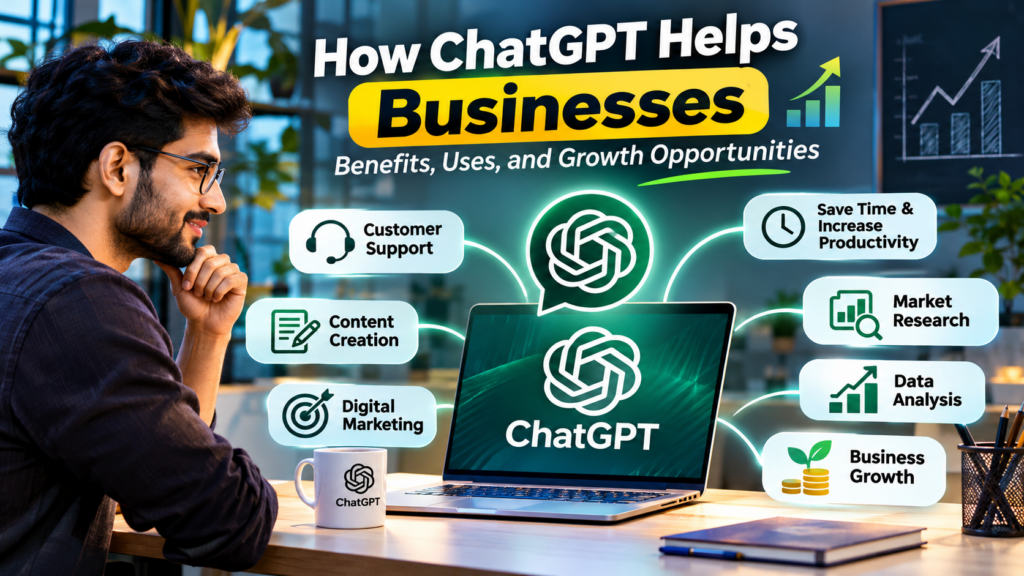
How ChatGPT Helps Businesses: Benefits, Uses, and Growth Opportunities

Artificial Intelligence (AI) is changing the way businesses operate in today’s digital world. From small startups to large companies, businesses are using AI-powered tools to save time, improve customer service, and increase productivity. One of the most popular AI tools is ChatGPT, developed by OpenAI. ChatGPT is an AI-powered chatbot that understands human language and generates responses based on user instructions. Businesses can use it for content creation, customer support, marketing, research, data analysis, and many other activities. In this blog, we will explore how ChatGPT helps businesses, its major benefits, and how companies can use it to improve their growth. 1. Improves Customer Support Customer support is one of the most important parts of any business. Customers expect quick answers to their questions, whether they are asking about products, services, payments, or delivery. ChatGPT can help businesses provide faster customer support by generating responses to frequently asked questions. When integrated into a company’s website or customer service system, AI-powered chatbots can assist customers around the clock. For example, an online shopping business can use ChatGPT-powered support to answer questions about order status, product details, return policies, and payment methods. This helps businesses improve customer satisfaction while reducing the workload of support teams. 2. Helps in Content Creation Content marketing plays an important role in building brand awareness and attracting potential customers. However, creating fresh and engaging content regularly can be time-consuming. ChatGPT helps businesses generate different types of content, including: For example, a digital marketing agency can use ChatGPT to generate blog ideas, create social media content, and prepare email marketing campaigns. Businesses should review and edit AI-generated content to ensure accuracy, originality, and brand consistency. 3. Supports Digital Marketing Strategies Digital marketing requires planning, creativity, and continuous optimization. ChatGPT can support marketing teams by generating campaign ideas, suggesting keywords, creating advertising copy, and developing marketing strategies. For example, a business launching a new product can use ChatGPT to create Facebook and Instagram ad headlines, promotional messages, and campaign ideas.

Blog

Content Marketing Tips for Beginners: A Complete Guide to Getting Started

Content marketing has become one of the most effective strategies for growing a business online. Whether you are a small business owner, digital marketer, freelancer, or beginner, content marketing can help you attract potential customers, build brand awareness, and increase website traffic. However, getting started with content marketing can feel confusing. You might wonder what type of content to create, where to publish it, and how to reach the right audience. Don’t worry! In this beginner-friendly guide, we will explore 10 practical content marketing tips to help you build a successful content marketing strategy. 1. Understand Your Target Audience The first step in content marketing is understanding your target audience. Before creating content, you need to know who you want to reach. Identify your audience’s age, interests, location, problems, and online behaviour. Try to understand what questions they search for on Google and what type of information they need. For example, if you run a fitness business, your target audience might be people interested in weight loss, healthy eating, and workout routines. Creating content according to your audience’s needs makes your marketing more effective. 2. Set Clear Content Marketing Goals Before publishing content, decide what you want to achieve through your marketing efforts. Your goals could include: Having clear goals helps you create the right content and measure your marketing performance. For beginners, it is better to focus on one or two goals instead of trying to achieve everything at once. 3. Choose the Right Content Format Content marketing is not limited to writing blogs. There are different content formats that you can use to connect with your audience. Some popular content formats include: Choose a format based on your audience’s preferences and your business goals. For example, educational businesses can use YouTube videos and blogs, while fashion brands can focus on Instagram reels and visual content. 4. Focus on SEO-Friendly Content Search Engine Optimization (SEO) plays an important role in content marketing. It helps your website and blog posts appear in search engine results. To create SEO-friendly content: For example, if your topic is digital marketing, you can target keywords such as “digital marketing tips for beginners” or “content marketing strategies.” Good SEO practices can help attract organic traffic to your website. 5. Create Valuable and Helpful Content Your main goal should be to provide useful information rather than simply promoting your products or services. People prefer content that answers their questions, solves problems, and provides practical solutions. For example, instead of writing only about your digital marketing services, create helpful articles such as: Helpful content builds trust and encourages visitors to return to your website. 6. Maintain a Consistent Content Schedule Consistency is one of the most important factors in content marketing. Publishing content randomly can make it difficult to build an audience. Instead, create a content calendar to plan your upcoming blogs, videos, and social media posts. For example, you can follow this beginner-friendly schedule: You don’t need to publish content every day. Focus on maintaining a realistic schedule and delivering quality content. 7. Use Social Media to Promote Your Content Creating good content is only half the work. You also need to promote it to reach more people. Social media platforms such as Instagram, Facebook, LinkedIn, and YouTube can help you distribute your content and connect with potential customers. For example, when you publish a new blog, share its key points through Instagram carousels, Facebook posts, or LinkedIn updates. Social media promotion can increase content visibility, website visits, and audience engagement. 8. Track Your Content Marketing Performance You cannot improve your content marketing strategy without measuring its performance. Use analytics tools to understand how your content is performing. Some useful tools include: Important metrics to monitor include website traffic, impressions

Blog

Content Marketing Tips for Beginners: A Complete Guide

Content marketing is one of the most effective strategies in digital marketing. Today, businesses use content to attract customers, build brand awareness, increase website traffic, and generate leads. Whether you are a small business owner, blogger, freelancer, or digital marketing beginner, content marketing can help you grow your online presence without depending entirely on paid advertisements. However, getting started can be challenging. You may wonder what type of content to create, where to publish it, and how to attract the right audience. In this blog, we will explore 10 useful content marketing tips for beginners to help you build an effective content strategy. 1. Understand Your Target Audience Before creating content, you need to understand who you want to reach. Your target audience includes people who may be interested in your products, services, or information. Try to understand: For example, if you run a fitness business, your audience may be interested in workout routines, healthy recipes, and fitness tips. 2. Set Clear Content Marketing Goals Every content marketing strategy should have a clear objective. Without goals, it becomes difficult to measure your progress. Some common content marketing goals include: Start with one or two goals and create content that supports them. 3. Choose the Right Content Format Content marketing is not limited to blog writing. You can create different types of content depending on your audience and marketing goals. Popular content formats include: For example, a digital marketing agency can publish SEO blogs, create Instagram marketing tips, and upload educational YouTube videos. 4. Focus on SEO-Friendly Content Search Engine Optimization (SEO) helps your content appear in relevant Google search results. If you want people to discover your blogs, you should follow basic SEO practices. Important SEO tips include: Remember, your main focus should be creating useful content for readers rather than simply adding keywords. 5. Create Valuable and Helpful Content People visit websites because they want information, solutions, or entertainment. Your content should answer their questions and solve real problems. For example, instead of publishing an article titled “Digital Marketing,” create a more specific article such as “10 Digital Marketing Tips for Small Businesses.” Helpful content can encourage visitors to spend more time on your website and return for future information. 6. Maintain a Consistent Content Schedule Consistency is important for building an online audience. You do not need to publish content every day. Instead, create a realistic schedule that you can maintain. For example: A content calendar can help you organize topics, publishing dates, and platforms. 7. Use Social Media to Promote Your Content Creating content is only one part of content marketing. You also need to promote it so that people can discover it. Social media platforms such as Instagram, Facebook, LinkedIn, and YouTube can help you reach a wider audience. For example, if you publish a blog about SEO strategies, you can create an Instagram carousel summarizing its main points and direct interested users to the full article. Choose platforms that match your target audience instead of trying to use every platform. 8. Use AI Tools for Content Creation Artificial Intelligence (AI) tools can make content marketing easier for beginners. Popular tools include: AI should be used as an assistant. Always review generated content, check facts, and add your own experience and creativity. 9. Track Your Content Marketing Performance You should regularly measure how your content is performing. Some important metrics include: Tools such as Google Analytics 4 and Google Search Console can help you understand website traffic and search performance. Use these insights to identify which topics attract the most interest and improve your future content. 10. Update and Improve Old Content Content marketing does not end after publishing an article. Over time, information can become outdated, links may stop working, and new information may become available. Review your older articles regularly. Update statistics, add relevant information, improve headings, replace outdated images, and fix broken links. Updating useful content can improve its quality and help maintain its relevance for readers. Conclusion Content marketing is an important part of digital marketing because it helps businesses attract audiences, build trust, and generate potential customers. As a beginner, focus on understanding your audience, creating helpful content, following basic SEO practices, maintaining consistency, and tracking performance. You do not need expensive tools or a large marketing team to get started. Begin with simple blog posts and social media content, learn from your results, and improve your strategy over time. Remember, successful content marketing is not just about publishing more content. It is about publishing the right content for the right audience.

Blog

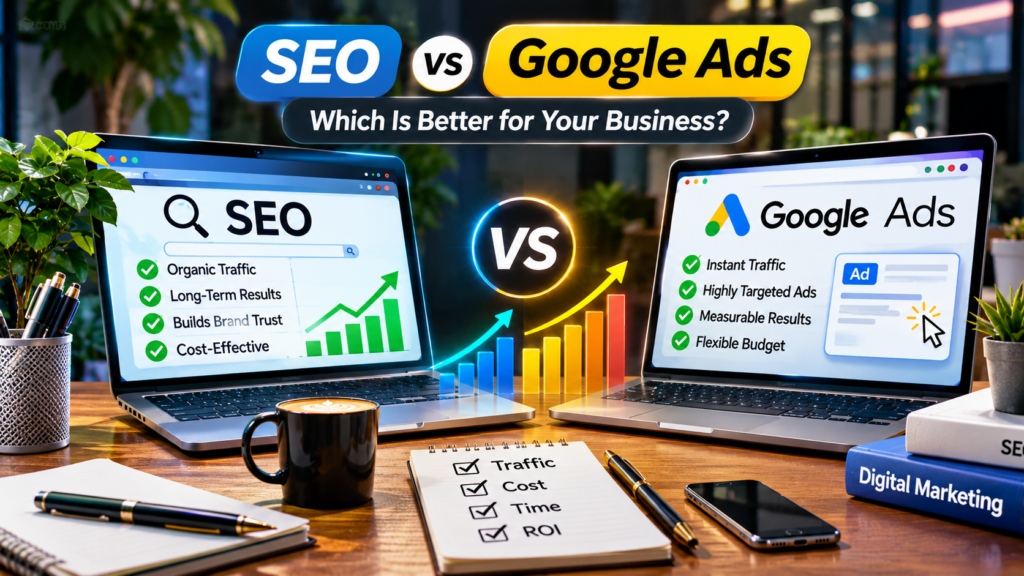
SEO vs Google Ads: Which Is Better for Your Business?

In today’s digital world, businesses need a strong online presence to attract customers and increase sales. When people search for products or services on Google, businesses want their websites to appear at the top of search results. Two popular digital marketing strategies that help businesses achieve this goal are Search Engine Optimization (SEO) and Google Ads. Both strategies help businesses generate website traffic, attract potential customers, and increase brand awareness. However, they work differently. In this blog, we will understand the difference between SEO and Google Ads, their benefits, costs, and which strategy is better for your business. 1. What Is SEO? Search Engine Optimization (SEO) is the process of improving a website to increase its visibility in Google’s organic (unpaid) search results. The main goal of SEO is to help a website rank higher when users search for relevant keywords. For example, if someone searches for “Best Digital Marketing Agency in Mumbai,” Google displays websites that are relevant to that search. Businesses use different SEO techniques to improve their rankings. Important SEO Activities: Example: A digital marketing agency publishes helpful blogs about SEO and digital marketing. Over time, its website may appear in Google’s organic search results and attract visitors without paying for every click. 2. What Is Google Ads? Google Ads is an online advertising platform that allows businesses to display paid advertisements on Google Search, YouTube, and other advertising networks. Businesses create advertising campaigns by selecting keywords, defining their target audience, and setting an advertising budget. For example, when someone searches for “Buy Running Shoes Online,” Google may display sponsored advertisements at the top of the search results. Important Google Ads Features: Example: An online shoe store creates a Google Search campaign targeting customers searching for running shoes. The advertisement can appear in sponsored search results, helping the business reach potential customers. 3. SEO vs Google Ads: Key Differences SEO and Google Ads both help businesses attract website visitors, but their approaches are different. Factors SEO Google Ads Cost No payment for organic clicks Usually pay for clicks or impressions, depending on campaign type Traffic Organic traffic Paid traffic Results Generally takes time Can start quickly after campaign approval Long-term benefits Can generate ongoing traffic Traffic generally stops when campaigns stop Competition Compete for organic rankings Compete in advertising auctions Trust Organic results may attract user trust Clearly labelled as advertisements Best for Long-term growth Immediate visibility Both strategies have different advantages depending on business requirements. 4. Benefits of SEO SEO is an important strategy for businesses that want sustainable online growth. 1. Long-Term Results: A well-optimized website can continue attracting organic visitors over time. 2. Cost-Effective: Businesses do not pay Google for every organic click, although SEO requires time, effort, and resources. 3. Builds Brand Credibility: Appearing in relevant organic search results can help businesses build trust with potential customers. 4. Better Website Experience: SEO encourages businesses to improve website speed, mobile usability, navigation, and content quality. 5. Consistent Website Traffic: Strong organic rankings can generate regular website visitors without continuously paying for advertisements. 5. Benefits of Google Ads Google Ads is useful for businesses that want to promote their products and services quickly. 1. Immediate Visibility: Businesses can start appearing in paid search results once their campaigns are approved and eligible to run. 2. Target Specific Customers: Advertisers can target audiences based on location, search intent, interests, and other available settings. 3. Flexible Budget: Businesses can control their advertising budgets and adjust campaigns according to their requirements. 4. Measurable Results: Google Ads provides campaign data such as clicks, impressions, conversions, and advertising costs. 5. Faster Lead Generation: Businesses can use paid advertisements to attract potential customers who are actively searching for their products or services. 6. SEO vs Google Ads: Which Is More Cost-Effective? The cost depends on your business goals, competition, industry, and marketing budget. SEO may require investment in content creation, technical improvements, SEO tools, and professional services. However, organic clicks do not have a direct per-click advertising charge. Google Ads requires an advertising budget. Businesses generally pay when users click on their search advertisements, although other campaign types may use different billing models. For long-term organic visibility, SEO can be a valuable investment. For immediate promotional campaigns, Google Ads may be more suitable. 7. Should You Choose SEO or Google Ads? The right strategy depends on your business objectives. Choose SEO if: Choose Google Ads if: For many businesses, combining both strategies can deliver better results. Conclusion SEO and Google Ads are two powerful digital marketing strategies that help businesses increase online visibility, attract customers, and generate sales. SEO focuses on improving organic search rankings and building long-term website traffic, while Google Ads focuses on paid advertising and faster visibility. Instead of considering them competitors, businesses should understand how both strategies work together. If you are starting a career in digital marketing, learning SEO and Google Ads can help you develop valuable skills and explore career opportunities in the digital marketing industry.

Blog

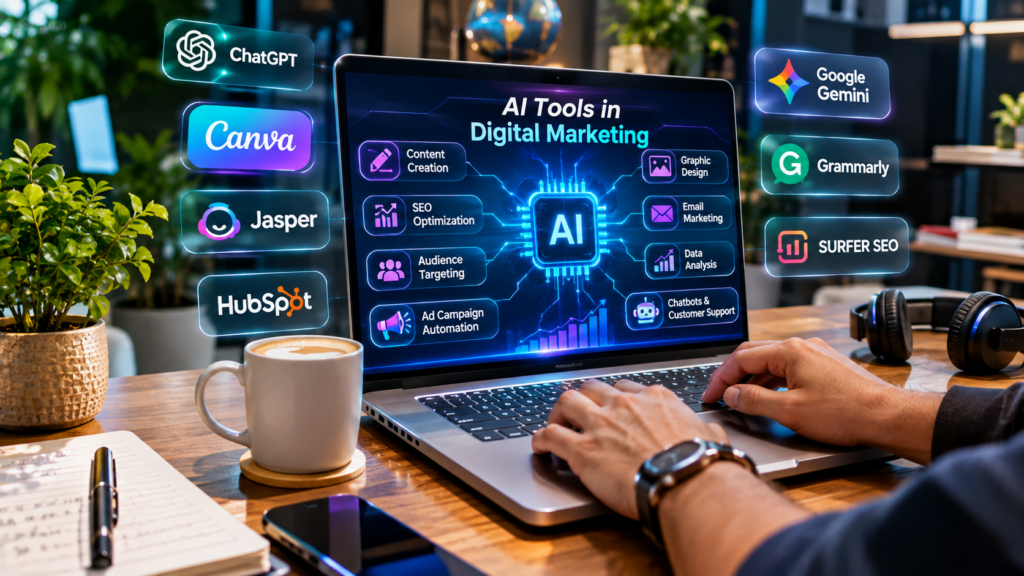
What Are AI Tools in Digital Marketing? A Complete Beginner’s Guide

Artificial Intelligence (AI) is changing the way businesses promote their products and services online. From creating social media posts to analyzing customer behaviour, AI is helping digital marketers complete tasks faster and make better marketing decisions. Today, businesses use AI-powered tools to save time, improve productivity, understand customers, and create effective marketing campaigns. Even beginners can use these tools without advanced technical knowledge. But what exactly are AI tools in digital marketing, and how can businesses use them? Let’s understand everything in this beginner-friendly guide. 1. What Are AI Tools in Digital Marketing? AI tools in digital marketing are software applications that use artificial intelligence to automate tasks, analyze information, generate content, and improve marketing activities. These tools can understand user instructions, identify patterns in data, generate ideas, and provide recommendations. For example, a digital marketer can use ChatGPT to write a blog outline, Canva AI to create social media designs, or Google Analytics to understand website traffic. AI tools help marketers reduce repetitive work and focus more on creativity, planning, and business growth. 2. Why Are AI Tools Important in Digital Marketing? AI tools are becoming important because businesses need to manage multiple marketing activities efficiently. Here are some major reasons why marketers use AI: However, AI-generated content should always be reviewed by humans to ensure accuracy, originality, and quality. 3. Top 7 AI Tools Used in Digital Marketing Several AI tools are available to help marketers with different activities. Let’s explore seven popular options. 1. ChatGPT ChatGPT is an AI assistant that helps marketers generate ideas, write content, prepare email drafts, and create marketing strategies. Uses: Best For: Content creators, bloggers, and digital marketing beginners. 2. Canva AI Canva is a popular graphic design platform with AI-powered features that help users create professional-looking designs. Uses: Best For: Social media marketers and graphic designers. 3. Google Gemini Google Gemini is an AI assistant that can help marketers research topics, generate ideas, summarize information, and prepare content drafts. Uses: Best For: Marketers who need research and creative assistance. 4. Grammarly Grammarly uses AI to help improve writing by checking grammar, spelling, clarity, and tone. Uses: Best For: Bloggers, content writers, and marketing professionals. 5. Jasper AI Jasper is an AI-powered content platform designed to support marketing teams with content creation and brand communication. Uses: Best For: Marketing teams and professional content creators. 6. Surfer SEO Surfer SEO helps content creators optimize website content for search engines by analyzing relevant search results and providing content recommendations. Uses: Best For: SEO professionals and bloggers. 7. HubSpot AI HubSpot provides AI-powered features within its marketing and customer relationship management platform. Uses: Best For: Businesses that want to manage marketing and customer relationships together. 4. How AI Tools Are Used in Different Areas of Digital Marketing AI tools support several important areas of digital marketing. SEO Marketing: AI helps marketers research keywords, identify content opportunities, and improve website content. Social Media Marketing: Marketers use AI to generate captions, plan content calendars, and create visual designs. Email Marketing: AI can help write email drafts, personalize messages, and support automated campaigns. Performance Marketing: AI-powered advertising platforms help optimize campaigns, analyze results, and improve audience targeting. Content Marketing: AI helps generate blog ideas, outlines, product descriptions, and other marketing content. 5. Benefits of Using AI Tools in Digital Marketing AI tools offer several benefits to businesses and marketing professionals. Small businesses can also use AI tools to access marketing assistance without building large marketing teams. 6. Challenges of Using AI Tools Although AI tools offer many advantages, they also have some limitations. Therefore, marketers should use AI as an assistant rather than depending on it completely. Conclusion AI tools are becoming an important part of digital marketing in 2026. They help businesses create content, improve SEO, manage social media, support email marketing, and analyze campaign performance. Tools such as ChatGPT, Canva AI, Google Gemini, Grammarly, Jasper, Surfer SEO, and HubSpot can make marketing activities easier and more efficient. If you are a beginner, start by learning two or three AI tools and practise using them in real marketing projects. Understanding how to combine AI technology with human creativity can help you develop valuable digital marketing skills and prepare for future career opportunities.

Blog

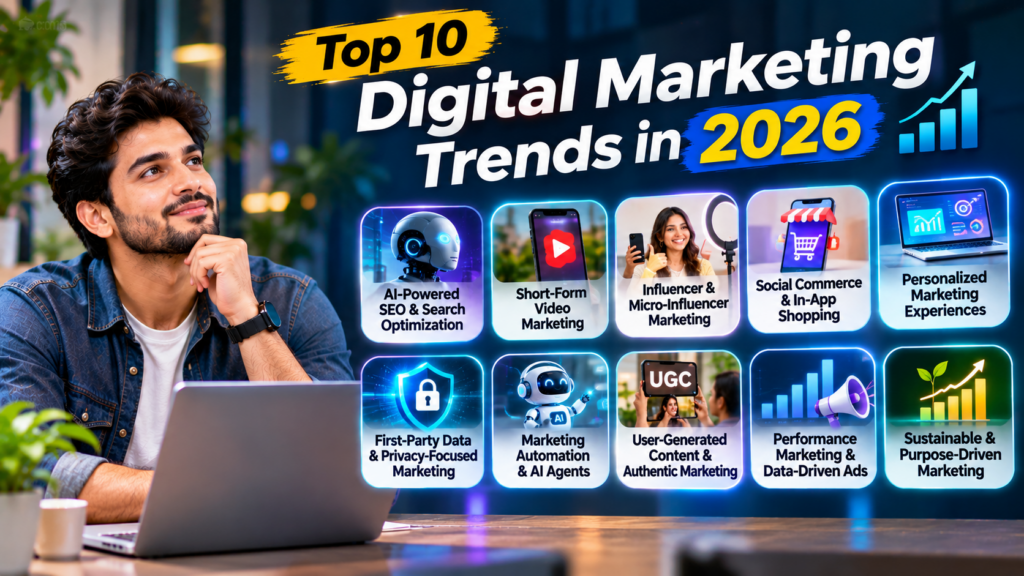
Top 10 Digital Marketing Trends in 2026

Digital marketing is changing rapidly as technology, artificial intelligence, and customer behaviour continue to evolve. Businesses are adopting new strategies to reach their target audiences, increase brand awareness, generate leads, and improve sales. In 2026, digital marketing is becoming more data-driven, personalized, and automated. From AI-powered campaigns to short-form videos, companies need to understand the latest trends to stay competitive. Let’s explore the top 10 digital marketing trends in 2026 that every marketer and business should know. 1. Artificial Intelligence in Digital Marketing Artificial Intelligence (AI) is one of the biggest trends in digital marketing in 2026. Businesses are using AI tools to create content, generate marketing ideas, analyze customer behaviour, and improve advertising campaigns. AI tools such as ChatGPT and other AI-powered platforms help marketers save time and complete repetitive tasks more efficiently. For example, marketers can use AI to write email drafts, create social media captions, analyze campaign results, and generate content ideas. However, human creativity and fact-checking remain important. 2. AI-Powered SEO and Search Optimization Search Engine Optimization (SEO) is evolving because people are increasingly using AI-powered search experiences to find information. Traditional keyword optimization is still important, but businesses also need content that directly answers users’ questions. Answer Engine Optimization (AEO) focuses on making content useful and easy for AI-powered search systems to understand and reference. Businesses should publish helpful articles, use clear headings, answer common questions, and demonstrate genuine expertise to improve their online visibility. 3. Short-Form Video Marketing Short-form videos continue to be a powerful way to attract attention online. Platforms such as Instagram Reels, YouTube Shorts, and TikTok allow businesses to connect with audiences through short and engaging videos. Businesses can use videos to demonstrate products, share customer reviews, explain services, and provide quick educational tips. For example, a small clothing business can create a 30-second video showing its latest collection. Short, useful, and entertaining videos can help brands increase engagement and reach new customers. 4. Influencer and Micro-Influencer Marketing Influencer marketing remains an important strategy in 2026. Businesses collaborate with content creators to promote their products and services to established audiences. Micro-influencers usually have smaller, more focused audiences and can offer brands access to specific communities. For example, a skincare company might collaborate with a beauty creator who regularly shares skincare tips. Genuine recommendations and relevant audiences can help businesses build trust and attract potential customers. 5. Social Commerce and In-App Shopping Social commerce allows customers to discover and purchase products through social media platforms. Instead of visiting multiple websites, users can explore products through social content and shopping features. Businesses are using product tags, shopping posts, creator collaborations, and live demonstrations to make purchasing easier. For example, a fashion brand can showcase a new outfit through an Instagram post and direct interested customers to its online store. 6. Personalized Marketing Experiences Customers increasingly expect brands to understand their interests and needs. Personalized marketing uses customer information and behaviour to deliver more relevant messages, offers, and recommendations. Businesses can personalize email campaigns, product suggestions, website experiences, and advertisements. For example, an online shopping website can recommend products based on a customer’s previous purchases or browsing activity. Personalization can improve customer engagement and encourage repeat purchases. 7. First-Party Data and Privacy-Focused Marketing Data privacy is becoming increasingly important in digital marketing. Businesses need to collect and use customer information responsibly, with appropriate consent and transparency. First-party data is information collected directly from customers through sources such as website forms, newsletter subscriptions, purchases, and customer accounts. Companies can use this information to understand their audiences and create relevant campaigns while following applicable privacy regulations. 8. Marketing Automation and AI Agents Marketing automation helps businesses manage repetitive marketing activities without performing every task manually. Companies use automation for welcome emails, follow-up messages, lead nurturing, customer notifications, and campaign scheduling. In 2026, AI-powered agents are also developing beyond basic automation. They can assist with tasks such as analyzing information, recommending actions, and supporting customer interactions. These technologies help marketing teams save time and focus on strategy and creativity. 9. User-Generated Content and Authentic Marketing User-generated content (UGC) refers to content created by customers, such as product reviews, testimonials, photos, and videos. People often want to see genuine customer experiences before making purchasing decisions. Businesses can encourage customers to share their experiences and feature authentic content in their marketing campaigns. For example, a restaurant can share customer food photographs and reviews on its social media pages. Authentic content can strengthen brand credibility and customer trust. 10. Performance Marketing and Data-Driven Advertising Performance marketing focuses on measurable results such as clicks, leads, sales, and conversions. Businesses use platforms such as Google Ads and Meta Ads to reach specific audiences and track campaign performance. Marketers analyze important metrics such as: By monitoring these metrics, businesses can identify successful campaigns, improve advertising strategies, and manage their marketing budgets more effectively. Conclusion Digital marketing in 2026 is focused on artificial intelligence, personalization, automation, video content, customer experience, and measurable results. Businesses that understand these trends can improve their online presence and build stronger relationships with customers. Whether you are a business owner, student, or digital marketing professional, learning these trends can help you understand the future of the industry. The most successful marketers will be those who combine modern technology with human creativity, useful content, and a clear understanding of customer needs.

Blog

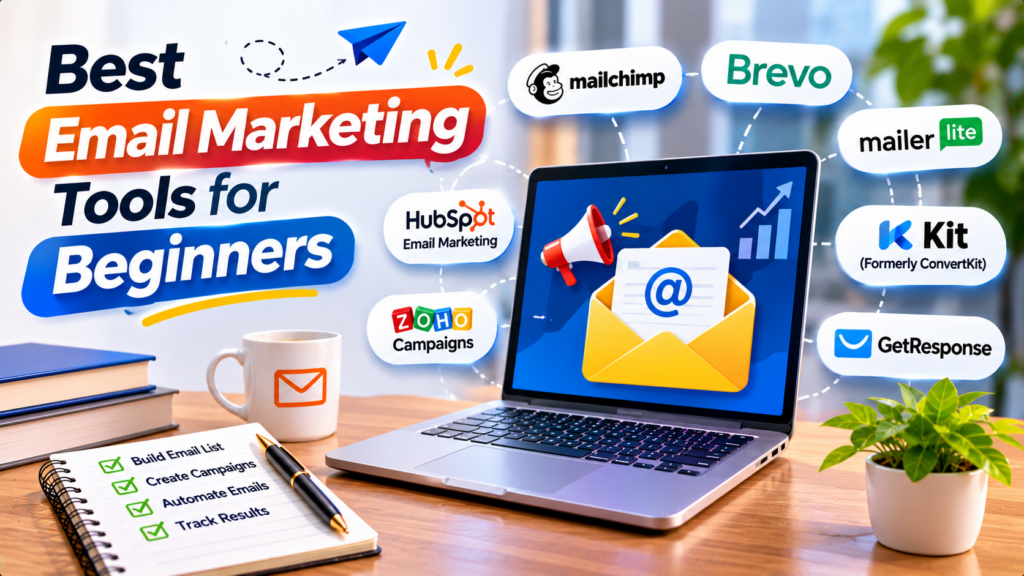
Best Email Marketing Tools for Beginners.

Email marketing is one of the most effective ways to connect with customers, promote products, and grow a business online. Whether you are a blogger, freelancer, small business owner, or digital marketing beginner, email marketing can help you reach your target audience directly. However, getting started can feel confusing because there are so many email marketing tools available. The good news is that you do not need advanced technical knowledge to use them. Many platforms offer beginner-friendly features such as ready-made templates, drag-and-drop editors, automation, and performance reports. In this blog, we will explore the 7 best email marketing tools for beginners and understand their important features. What Is an Email Marketing Tool? An email marketing tool is software that helps businesses create, send, manage, and track marketing emails. Instead of sending emails individually, you can send campaigns to hundreds or thousands of subscribers at once. These tools also help you automate emails, manage contact lists, create newsletters, and measure campaign performance. 1. Mailchimp Mailchimp is one of the most popular email marketing platforms for beginners. It provides an easy-to-use interface that helps users create professional email campaigns without coding knowledge. Key Features: Best For: Small businesses, beginners, and marketers who want to create professional email campaigns. 2. Brevo Brevo is an email marketing platform that offers email campaigns, automation, contact management, and additional communication tools. It is useful for businesses that want to manage customer communication from one platform. Beginners can use its campaign editor to design emails and track important results. Key Features: Best For: Small businesses and beginners looking for multiple marketing features in one platform. 3. MailerLite MailerLite is known for its simple interface and beginner-friendly email creation features. It allows users to create newsletters, landing pages, and signup forms. You can also build automated email workflows to send messages when subscribers take specific actions. Key Features: Best For: Bloggers, freelancers, content creators, and small businesses. 4. Kit (Formerly ConvertKit) Kit is designed mainly for content creators, bloggers, and online educators. It helps creators build an email subscriber list and communicate with their audience. For example, a blogger can use Kit to send automatic welcome emails whenever someone subscribes to their newsletter. Key Features: Best For: Bloggers, YouTubers, and digital content creators. 5. GetResponse GetResponse is an email marketing platform that provides tools for email campaigns, automation, landing pages, and audience management. It can help businesses create marketing campaigns and build customer relationships through automated communication. Key Features: Best For: Small businesses and marketers who want additional marketing features as they grow. 6. HubSpot Email Marketing HubSpot offers email marketing features as part of its broader CRM and marketing platform. It helps businesses manage customer information and create personalized marketing campaigns. Its connection with CRM data makes it useful for businesses that want to understand their customers and improve communication. Key Features: Best For: Businesses that want to combine email marketing with customer relationship management. 7. Zoho Campaigns Zoho Campaigns is an email marketing solution that helps businesses create newsletters, manage subscribers, and automate email campaigns. It also integrates with other Zoho business applications, making it useful for companies already using the Zoho ecosystem. Key Features: Best For: Small businesses, startups, and companies using Zoho applications. How to Choose the Right Email Marketing Tool? Before selecting an email marketing platform, consider these important factors: Remember that free plans have different subscriber limits, sending limits, and feature restrictions. Always check the latest pricing and plan details before choosing a platform. Conclusion Email marketing is an important part of digital marketing because it helps businesses build relationships with customers, generate leads, and promote their products or services. Tools like Mailchimp, Brevo, MailerLite, Kit, GetResponse, HubSpot, and Zoho Campaigns make it easier for beginners to start email marketing without advanced technical skills. If you are just starting, choose a tool that matches your budget and business requirements. Learn how to create attractive emails, build a subscriber list, and track campaign results. With regular practice, you can develop effective email marketing campaigns and grow your digital marketing skills.

Blog

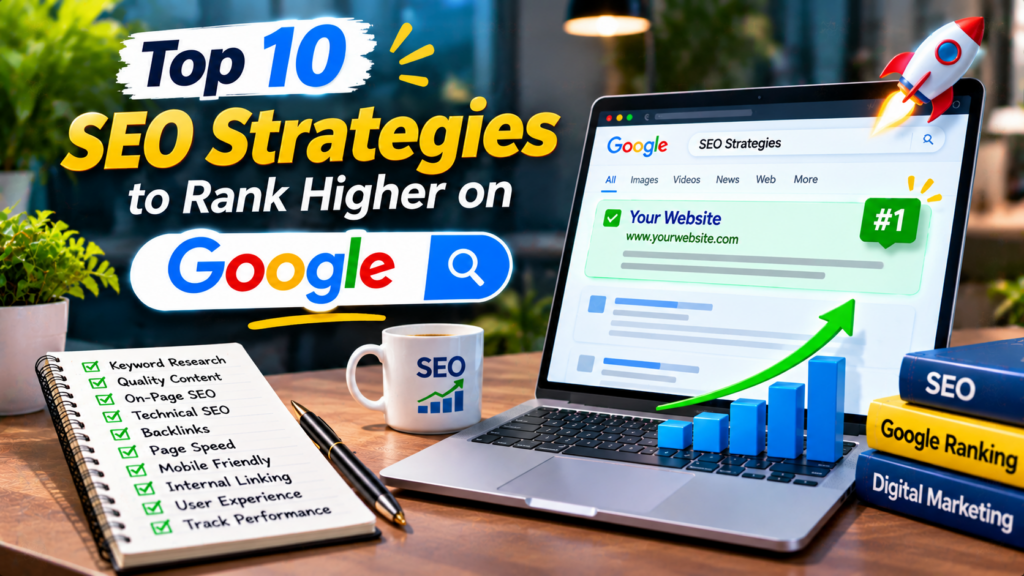
Top 10 SEO Strategies to Rank Higher on Google.

Introduction In today’s digital world, having a website is not enough to grow an online business. Your website needs to appear in search engine results when potential customers search for products, services, or information related to your business. This is where Search Engine Optimization (SEO) plays an important role. SEO is the process of improving a website’s visibility on search engines like Google. A well-optimized website can attract more organic traffic, reach potential customers, build brand awareness, and generate business opportunities without paying for every website visit. However, SEO strategies continue to evolve as search engines improve their algorithms and introduce new AI-powered search experiences. In 2026, businesses need to focus on quality content, user experience, technical performance, and search intent. Here are the top 10 SEO strategies to help your website rank higher on Google in 2026. 1. Focus on Keyword Research Keyword research is one of the most important parts of SEO. It helps you understand what people are searching for on Google. Before creating website content, identify relevant keywords related to your business, products, or services. For example, if you own a digital marketing agency in Mumbai, you can target keywords such as: Tools like Google Keyword Planner, Ahrefs, and SEMrush can help you discover relevant keywords and understand search demand. 2. Create High-Quality and Helpful Content Content plays an important role in SEO. Google aims to provide users with useful, relevant, and trustworthy information. Instead of creating content only to include keywords, focus on answering your audience’s questions and solving their problems. For example, if your website focuses on digital marketing, you can publish blogs about SEO, Google Ads, social media marketing, email marketing, and AI marketing. Make sure your articles provide valuable information, practical examples, and clear explanations. 3. Optimize Your On-Page SEO On-page SEO means optimizing individual website pages to help search engines understand their content. Important on-page SEO elements include: Proper on-page optimization improves content structure and helps search engines understand your website. 4. Improve Website Loading Speed Website speed is an important part of user experience. Visitors may leave a website if pages take too long to load. A slow website can negatively affect user experience and make it harder for visitors to access your content. To improve website speed: You can use Google PageSpeed Insights to analyze your website’s loading performance. 5. Make Your Website Mobile-Friendly Most internet users access websites through smartphones. Therefore, having a mobile-friendly website is essential. Google primarily uses the mobile version of website content for indexing and ranking. Make sure your website: A responsive website provides a better experience for mobile visitors. 6. Build Quality Backlinks Backlinks are links from other websites that point to your website. They can help search engines discover your content and understand your website’s reputation. However, not all backlinks are valuable. Focus on earning relevant and trustworthy backlinks instead of purchasing large numbers of low-quality links. Some ways to build quality backlinks include: Quality matters more than quantity when building backlinks. 7. Focus on Technical SEO Technical SEO helps search engines crawl, understand, and index your website properly. Even high-quality content may struggle to appear in search results if search engines cannot access important pages. Important technical SEO activities include: Google Search Console is a useful tool for identifying website indexing and technical SEO issues. 8. Optimize Images for SEO Images make website content more attractive and improve the overall user experience. However, large and unoptimized images can slow down your website. Follow these image SEO practices: These practices can improve website performance and help search engines understand your images. 9. Use Internal Linking Strategically Internal linking means connecting one page of your website to another relevant page. For example, if you publish a blog about SEO, you can link it to other articles about keyword research, content marketing, technical SEO, and digital marketing. Internal links help visitors discover related information and make website navigation easier. They also help search engines understand the relationship between different pages on your website. 10. Track SEO Performance Regularly SEO is not a one-time activity. You need to monitor your website’s performance and continuously improve your strategy. Some important SEO metrics include: Tools such as Google Analytics 4, Google Search Console, Ahrefs, and SEMrush can help you monitor and analyze SEO performance. Regular analysis helps you identify what is working and where improvements are needed. Conclusion Ranking higher on Google requires a combination of quality content, proper keyword research, technical optimization, backlinks, and a positive user experience. In 2026, businesses should focus on creating helpful content that satisfies user search intent rather than relying only on traditional keyword strategies. Start by implementing these 10 SEO strategies, monitor your website performance, and make improvements regularly. Remember, SEO takes time and consistency. There is no guaranteed shortcut to the first position on Google. The best SEO strategy is to create a website that provides real value to users while following search engine best practices.

Scroll to Top