
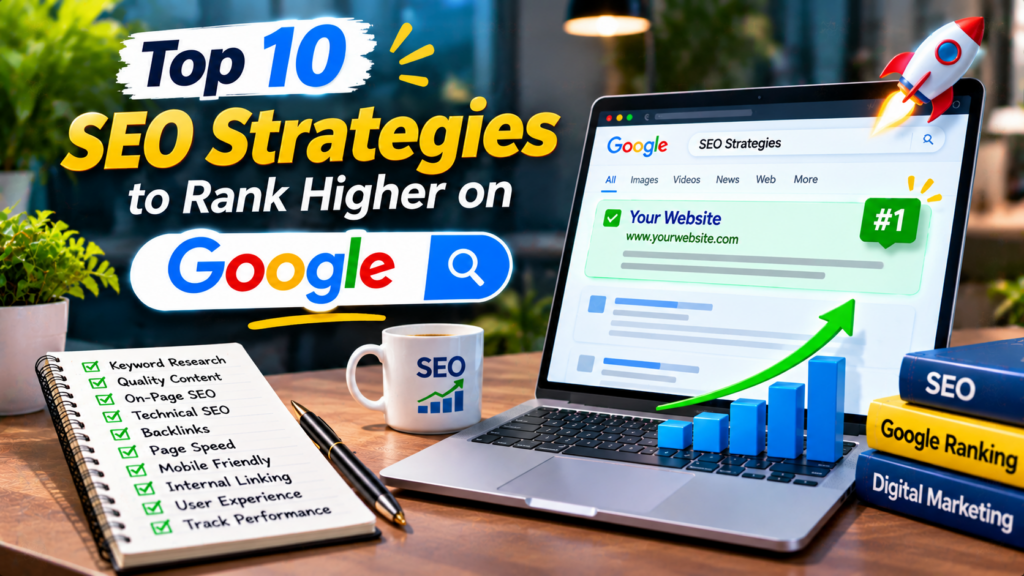
Top 10 SEO Strategies to Rank Higher on Google.
Introduction In today’s digital world, having a website is not enough to grow an online business. Your website needs to appear in search engine results when potential customers search for products, services, or information related to your business. This is where Search Engine Optimization (SEO) plays an important role. SEO is the process of improving a website’s visibility on search engines like Google. A well-optimized website can attract more organic traffic, reach potential customers, build brand awareness, and generate business opportunities without paying for every website visit. However, SEO strategies continue to evolve as search engines improve their algorithms and introduce new AI-powered search experiences. In 2026, businesses need to focus on quality content, user experience, technical performance, and search intent. Here are the top 10 SEO strategies to help your website rank higher on Google in 2026. 1. Focus on Keyword Research Keyword research is one of the most important parts of SEO. It helps you understand what people are searching for on Google. Before creating website content, identify relevant keywords related to your business, products, or services. For example, if you own a digital marketing agency in Mumbai, you can target keywords such as: Tools like Google Keyword Planner, Ahrefs, and SEMrush can help you discover relevant keywords and understand search demand. 2. Create High-Quality and Helpful Content Content plays an important role in SEO. Google aims to provide users with useful, relevant, and trustworthy information. Instead of creating content only to include keywords, focus on answering your audience’s questions and solving their problems. For example, if your website focuses on digital marketing, you can publish blogs about SEO, Google Ads, social media marketing, email marketing, and AI marketing. Make sure your articles provide valuable information, practical examples, and clear explanations. 3. Optimize Your On-Page SEO On-page SEO means optimizing individual website pages to help search engines understand their content. Important on-page SEO elements include: Proper on-page optimization improves content structure and helps search engines understand your website. 4. Improve Website Loading Speed Website speed is an important part of user experience. Visitors may leave a website if pages take too long to load. A slow website can negatively affect user experience and make it harder for visitors to access your content. To improve website speed: You can use Google PageSpeed Insights to analyze your website’s loading performance. 5. Make Your Website Mobile-Friendly Most internet users access websites through smartphones. Therefore, having a mobile-friendly website is essential. Google primarily uses the mobile version of website content for indexing and ranking. Make sure your website: A responsive website provides a better experience for mobile visitors. 6. Build Quality Backlinks Backlinks are links from other websites that point to your website. They can help search engines discover your content and understand your website’s reputation. However, not all backlinks are valuable. Focus on earning relevant and trustworthy backlinks instead of purchasing large numbers of low-quality links. Some ways to build quality backlinks include: Quality matters more than quantity when building backlinks. 7. Focus on Technical SEO Technical SEO helps search engines crawl, understand, and index your website properly. Even high-quality content may struggle to appear in search results if search engines cannot access important pages. Important technical SEO activities include: Google Search Console is a useful tool for identifying website indexing and technical SEO issues. 8. Optimize Images for SEO Images make website content more attractive and improve the overall user experience. However, large and unoptimized images can slow down your website. Follow these image SEO practices: These practices can improve website performance and help search engines understand your images. 9. Use Internal Linking Strategically Internal linking means connecting one page of your website to another relevant page. For example, if you publish a blog about SEO, you can link it to other articles about keyword research, content marketing, technical SEO, and digital marketing. Internal links help visitors discover related information and make website navigation easier. They also help search engines understand the relationship between different pages on your website. 10. Track SEO Performance Regularly SEO is not a one-time activity. You need to monitor your website’s performance and continuously improve your strategy. Some important SEO metrics include: Tools such as Google Analytics 4, Google Search Console, Ahrefs, and SEMrush can help you monitor and analyze SEO performance. Regular analysis helps you identify what is working and where improvements are needed. Conclusion Ranking higher on Google requires a combination of quality content, proper keyword research, technical optimization, backlinks, and a positive user experience. In 2026, businesses should focus on creating helpful content that satisfies user search intent rather than relying only on traditional keyword strategies. Start by implementing these 10 SEO strategies, monitor your website performance, and make improvements regularly. Remember, SEO takes time and consistency. There is no guaranteed shortcut to the first position on Google. The best SEO strategy is to create a website that provides real value to users while following search engine best practices.