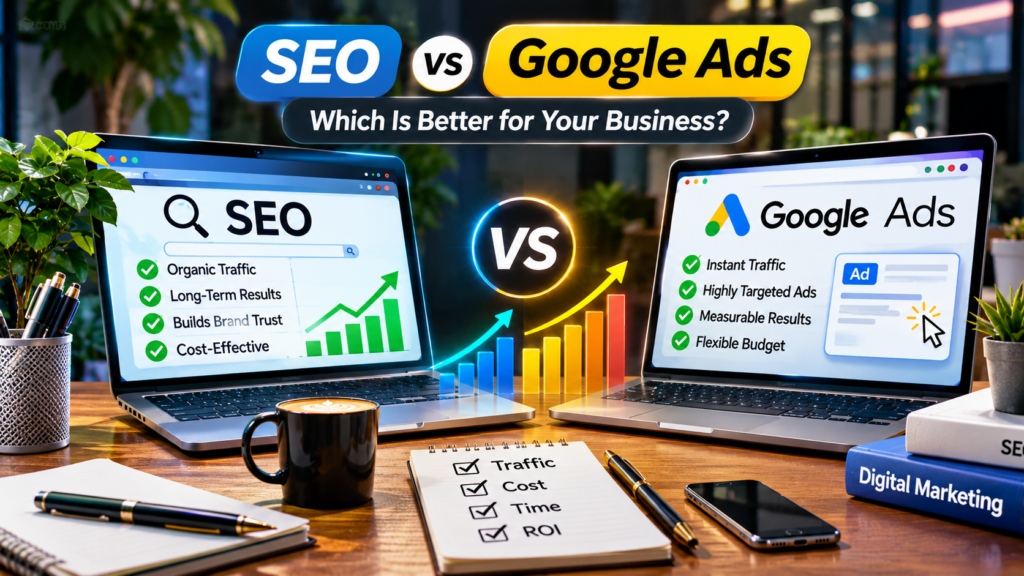
SEO vs Google Ads: Which Is Better for Your Business?
In today’s digital world, businesses need a strong online presence to attract customers and increase sales. When people search for products or services on Google, businesses want their websites to appear at the top of search results. Two popular digital marketing strategies that help businesses achieve this goal are Search Engine Optimization (SEO) and Google Ads. Both strategies help businesses generate website traffic, attract potential customers, and increase brand awareness. However, they work differently. In this blog, we will understand the difference between SEO and Google Ads, their benefits, costs, and which strategy is better for your business. 1. What Is SEO? Search Engine Optimization (SEO) is the process of improving a website to increase its visibility in Google’s organic (unpaid) search results. The main goal of SEO is to help a website rank higher when users search for relevant keywords. For example, if someone searches for “Best Digital Marketing Agency in Mumbai,” Google displays websites that are relevant to that search. Businesses use different SEO techniques to improve their rankings. Important SEO Activities: Example: A digital marketing agency publishes helpful blogs about SEO and digital marketing. Over time, its website may appear in Google’s organic search results and attract visitors without paying for every click. 2. What Is Google Ads? Google Ads is an online advertising platform that allows businesses to display paid advertisements on Google Search, YouTube, and other advertising networks. Businesses create advertising campaigns by selecting keywords, defining their target audience, and setting an advertising budget. For example, when someone searches for “Buy Running Shoes Online,” Google may display sponsored advertisements at the top of the search results. Important Google Ads Features: Example: An online shoe store creates a Google Search campaign targeting customers searching for running shoes. The advertisement can appear in sponsored search results, helping the business reach potential customers. 3. SEO vs Google Ads: Key Differences SEO and Google Ads both help businesses attract website visitors, but their approaches are different. Factors SEO Google Ads Cost No payment for organic clicks Usually pay for clicks or impressions, depending on campaign type Traffic Organic traffic Paid traffic Results Generally takes time Can start quickly after campaign approval Long-term benefits Can generate ongoing traffic Traffic generally stops when campaigns stop Competition Compete for organic rankings Compete in advertising auctions Trust Organic results may attract user trust Clearly labelled as advertisements Best for Long-term growth Immediate visibility Both strategies have different advantages depending on business requirements. 4. Benefits of SEO SEO is an important strategy for businesses that want sustainable online growth. 1. Long-Term Results: A well-optimized website can continue attracting organic visitors over time. 2. Cost-Effective: Businesses do not pay Google for every organic click, although SEO requires time, effort, and resources. 3. Builds Brand Credibility: Appearing in relevant organic search results can help businesses build trust with potential customers. 4. Better Website Experience: SEO encourages businesses to improve website speed, mobile usability, navigation, and content quality. 5. Consistent Website Traffic: Strong organic rankings can generate regular website visitors without continuously paying for advertisements. 5. Benefits of Google Ads Google Ads is useful for businesses that want to promote their products and services quickly. 1. Immediate Visibility: Businesses can start appearing in paid search results once their campaigns are approved and eligible to run. 2. Target Specific Customers: Advertisers can target audiences based on location, search intent, interests, and other available settings. 3. Flexible Budget: Businesses can control their advertising budgets and adjust campaigns according to their requirements. 4. Measurable Results: Google Ads provides campaign data such as clicks, impressions, conversions, and advertising costs. 5. Faster Lead Generation: Businesses can use paid advertisements to attract potential customers who are actively searching for their products or services. 6. SEO vs Google Ads: Which Is More Cost-Effective? The cost depends on your business goals, competition, industry, and marketing budget. SEO may require investment in content creation, technical improvements, SEO tools, and professional services. However, organic clicks do not have a direct per-click advertising charge. Google Ads requires an advertising budget. Businesses generally pay when users click on their search advertisements, although other campaign types may use different billing models. For long-term organic visibility, SEO can be a valuable investment. For immediate promotional campaigns, Google Ads may be more suitable. 7. Should You Choose SEO or Google Ads? The right strategy depends on your business objectives. Choose SEO if: Choose Google Ads if: For many businesses, combining both strategies can deliver better results. Conclusion SEO and Google Ads are two powerful digital marketing strategies that help businesses increase online visibility, attract customers, and generate sales. SEO focuses on improving organic search rankings and building long-term website traffic, while Google Ads focuses on paid advertising and faster visibility. Instead of considering them competitors, businesses should understand how both strategies work together. If you are starting a career in digital marketing, learning SEO and Google Ads can help you develop valuable skills and explore career opportunities in the digital marketing industry.