
Author name: Admin

Blog

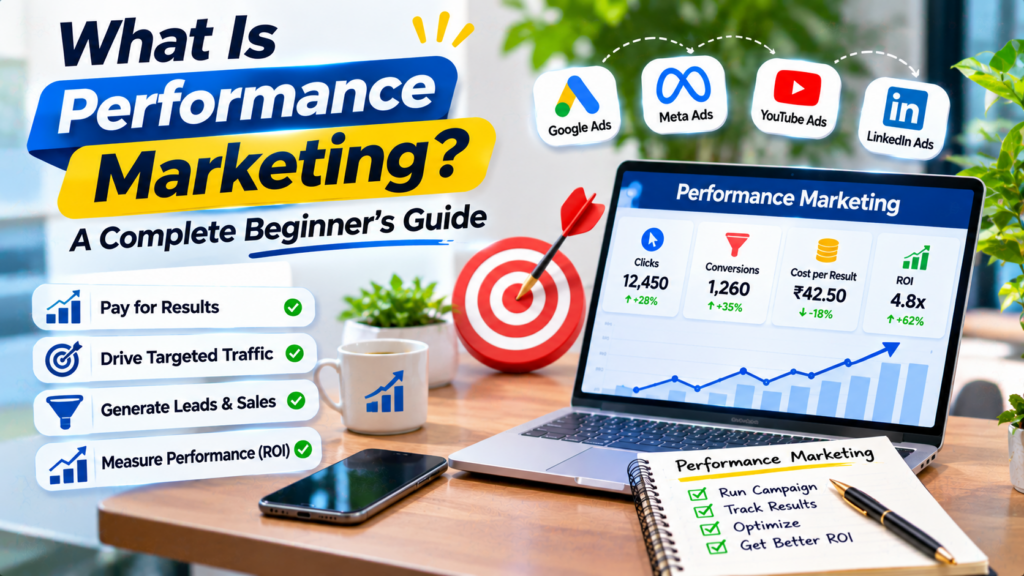
What Is Performance Marketing? A Complete Beginner’s Guide.

Introduction In today’s digital world, businesses are constantly looking for effective ways to reach customers, generate leads, and increase sales. Traditional advertising focuses on promoting products and building brand awareness, but businesses also want measurable results from their marketing investments. This is where Performance Marketing comes in. Performance Marketing is a digital marketing strategy in which businesses pay for specific measurable actions, such as clicks, leads, conversions, app installations, or sales. It helps companies understand how their advertising campaigns are performing and whether they are getting good returns on their investment. In this beginner’s guide, we will understand what performance marketing is, how it works, its different channels, benefits, and career opportunities. 1. What Is Performance Marketing? Performance Marketing is a type of online advertising where advertisers focus on measurable results rather than simply displaying advertisements. Businesses can track important activities such as website visits, clicks, leads, purchases, and conversions. For example, imagine you own an online clothing store and want to sell 100 T-shirts. You run a Facebook or Instagram advertising campaign targeting people interested in fashion. You can track: This information helps you understand whether your advertising campaign is successful. 2. How Does Performance Marketing Work? Performance Marketing follows a simple process that helps businesses achieve specific marketing goals. Step 1: Set Marketing Goals First, businesses decide what they want to achieve, such as generating leads, increasing website traffic, or selling products. Step 2: Select Advertising Platforms Marketers choose platforms such as Google Ads, Facebook Ads, Instagram Ads, or LinkedIn Ads depending on their target audience. Step 3: Create Advertisements They create attractive advertisements using images, videos, headlines, and call-to-action buttons. Step 4: Launch Campaigns The advertisements are published to reach the selected audience. Step 5: Track Performance Marketers monitor clicks, impressions, conversions, leads, and advertising costs. Step 6: Optimize Campaigns Based on the results, marketers improve their advertisements, targeting, and budgets to achieve better performance. 3. Types of Performance Marketing Channels There are several channels businesses use to run performance marketing campaigns. 1. Search Engine Marketing (SEM) Search Engine Marketing involves promoting websites through paid advertisements on search engines like Google. For example, when someone searches for “Best Digital Marketing Agency in Mumbai,” sponsored results may appear at the top of Google. 2. Social Media Advertising Businesses use platforms such as Facebook, Instagram, and LinkedIn to promote their products and services. These platforms allow advertisers to target audiences based on interests, demographics, and other available targeting options. 3. Affiliate Marketing Affiliate Marketing is a strategy where individuals or publishers promote another company’s products and earn commissions when users complete specific actions, usually purchases. For example, a YouTube creator can promote a product using an affiliate link and earn a commission from successful sales. 4. Display Advertising Display advertising uses visual advertisements such as banners, images, and videos on websites and applications to attract potential customers. 5. Email Marketing Businesses use email campaigns to communicate with customers, promote products, share offers, and encourage purchases. 4. Important Performance Marketing Metrics Performance marketers use different metrics to measure the success of advertising campaigns. For example, if a business spends ₹10,000 on advertising and generates ₹40,000 in revenue, its ROAS is 4x. This means the business generates ₹4 in revenue for every ₹1 spent on advertising. 5. Benefits of Performance Marketing Performance Marketing offers several advantages to businesses: 6. Popular Performance Marketing Tools Some commonly used tools and platforms include: 7. How to Start a Career in Performance Marketing? Performance Marketing is a growing career option for people interested in advertising, analytics, and digital marketing. Beginners can start by learning these skills: You can also create sample advertising campaigns and practice analyzing their performance to build a portfolio. Conclusion Performance Marketing is an effective digital marketing strategy that helps businesses achieve measurable results through online advertising. It allows companies to track their advertising expenses, understand customer behaviour, generate leads, and increase sales. From Google Ads and social media advertising to affiliate marketing and email campaigns, performance marketing provides several opportunities for businesses to grow online. For beginners, learning advertising platforms, marketing metrics, and campaign optimization is a great way to start a career in this field. Remember: Performance Marketing is not just about spending money on advertisements; it is about getting measurable results from every marketing investment.
Blog

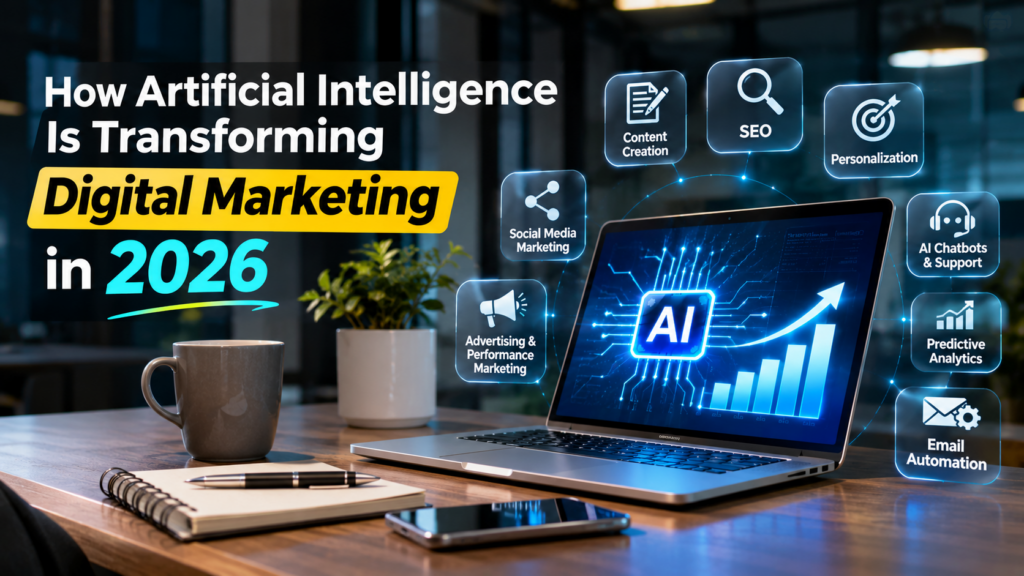
How Artificial Intelligence Is Transforming Digital Marketing.

Introduction Artificial Intelligence (AI) is changing the way businesses promote their products and services online. In 2026, AI has become an important part of digital marketing because it helps businesses work smarter, save time, understand customers, and improve marketing results. From creating content and managing social media to running advertisements and improving search engine rankings, AI is transforming almost every area of digital marketing. Today, businesses use AI-powered tools to understand customer behaviour, identify market trends, and create personalized marketing strategies. Let’s explore how Artificial Intelligence is transforming digital marketing in 2026. 1. AI-Powered Content Creation Content is one of the most important parts of digital marketing. Businesses need blogs, website content, social media posts, product descriptions, and advertisements to attract customers. Creating fresh content regularly can take a lot of time. AI tools such as ChatGPT, Google Gemini, and Jasper help marketers generate content ideas, write captions, create blog outlines, and improve existing content. These tools make content creation faster and easier. However, AI-generated content should always be reviewed and edited by humans to maintain quality, accuracy, and originality. 2. Smarter Search Engine Optimization (SEO) Search Engine Optimization (SEO) helps websites improve their visibility on search engines like Google. AI is making SEO more efficient by helping marketers research keywords, understand search intent, analyze competitors, and identify content opportunities. AI-powered SEO tools can suggest relevant keywords, find website errors, analyze website performance, and recommend content improvements. AI is also changing how people search for information. Businesses now need to create useful, relevant, and trustworthy content that can perform well in traditional search engines as well as AI-powered search experiences. 3. Personalized Customer Experience Customers prefer brands that understand their interests and needs. AI helps businesses provide personalized experiences by analyzing customer behaviour, browsing history, and previous purchases. For example, when customers shop on an e-commerce website, AI can recommend products based on their interests and shopping activities. Personalized recommendations help businesses improve customer engagement, build stronger relationships, and increase the chances of sales. 4. AI in Social Media Marketing Social media platforms such as Instagram, Facebook, and LinkedIn are important channels for digital marketing. Managing multiple social media accounts and regularly creating engaging content can be challenging. AI tools help marketers generate post ideas, write captions, analyze audience engagement, identify trends, and plan content schedules. AI can also help businesses understand which types of posts receive more attention from their audiences. This allows marketers to improve their social media strategies and create more engaging content. 5. AI-Powered Advertising and Performance Marketing Performance marketing focuses on achieving measurable results such as website traffic, leads, conversions, and sales. AI is helping businesses improve their advertising campaigns through automation and data analysis. Platforms like Google Ads and Meta Ads use AI-powered features to help advertisers optimize campaigns, identify relevant audiences, and improve ad performance. AI can assist with audience targeting, automated bidding, advertisement testing, and campaign analysis. This helps marketers make better decisions and use their advertising budgets more effectively. 6. AI Chatbots and Customer Support AI chatbots are changing the way businesses communicate with customers. They can answer common questions, provide product information, collect customer details, and offer basic customer support. For example, if a customer visits an online shopping website and asks about product prices or delivery information, an AI chatbot can provide an immediate response. AI chatbots can operate 24 hours a day, helping businesses improve customer service, save time, and generate potential leads. 7. Predictive Analytics and Data-Driven Marketing AI helps businesses analyze large amounts of customer and marketing data. Predictive analytics uses historical information to identify patterns and estimate possible future outcomes. For example, an online store can analyze previous sales data to understand which products may become popular during festive seasons. This information helps marketers plan campaigns, understand customer demand, manage budgets, and make more informed business decisions. 8. Email Marketing Automation Email marketing is an effective way to communicate with existing and potential customers. AI makes email marketing smarter by helping businesses create personalized messages, suggest subject lines, segment audiences, and optimize campaign timing. For example, an online shopping company can send personalized product recommendations or special offers based on a customer’s previous purchases. This helps businesses improve customer engagement and build long-term relationships. Benefits of Artificial Intelligence in Digital Marketing AI provides several benefits to businesses and digital marketers: Challenges of Using AI in Digital Marketing Although AI offers many advantages, it also comes with some challenges. AI-generated information can sometimes be inaccurate, so human verification is important. Businesses must also protect customer data and use AI responsibly. Another challenge is overdependence on AI. Digital marketing still requires human creativity, emotional understanding, communication skills, and strategic thinking. Conclusion Artificial Intelligence is transforming digital marketing by making business activities faster, smarter, and more efficient. From SEO and content creation to social media marketing, paid advertising, and customer support, AI is helping businesses improve their online presence and connect with customers. However, AI should be used as a powerful assistant rather than a complete replacement for human marketers. Businesses that combine AI technology with human creativity and marketing knowledge can build stronger marketing strategies.

Scroll to Top